
Latest Industry Brief - October 15, 2026
Resource-Efficient Finishing: Cycle-Time Proof in Delivery Planning
Energy and water efficiency are becoming practical sourcing and costing metrics for premium knitwear.
Cycle-Time Evidence Sharpens Delivery Planning
CAA Has Submitted Its Draft SB 54 Extended Producer Responsibility Plan to CalRecycle - JD Supra (JD Supra) provides timely context for a wider shift in premium knitwear. European and North American boutique labels now need manufacturing partners that can connect process choices, wash cycles, finishing routes, and production scheduling to measurable resource use.
The Buyer Question
Which production decisions reduce resource exposure without changing the approved hand feel?
- Wet finishing choices can influence both appearance and resource intensity.
- Batch planning affects energy use and schedule reliability.
- Efficiency claims need a defined operational boundary.
- Lower-impact processes must still pass color, shrinkage, and touch standards.
Manufacturer insight: Resource efficiency becomes commercially meaningful when it improves resilience without diluting product quality.
What Manufacturing Readiness Looks Like
Jiongyun Weaving provides a useful benchmark for this theme: its development teams can connect specialist knitwear execution with responsive sampling and MOQ 100 pieces per style. That model gives boutique brands room to test a focused product idea while preserving the workmanship expected in high-end collections.
Latest Industry Brief - October 13, 2026
Flexible Sourcing Needs Workmanship Gates for Risk Review
Trade volatility is rewarding knitwear suppliers that combine flexible commitments with transparent planning.
Workmanship Gates Keep Risk Review Specific
Independent industry monitoring (industry monitoring) provides timely context for a wider shift in premium knitwear. European and North American boutique labels now need manufacturing partners that can reduce exposure through realistic lead times, staged commitments, clear material ownership, and fast decision paths.
The Buyer Question
How quickly can the supplier re-plan without losing product quality when trade conditions change?
- Cost scenarios should separate material, labor, freight, and duty exposure.
- Staged yarn commitments can reduce risk when demand remains uncertain.
- Fast approvals matter more when transport buffers become unreliable.
- Supplier communication should include alternatives before disruption occurs.
Manufacturer insight: Resilience comes from knowing which decisions can move quickly and which quality standards cannot move at all.
What Manufacturing Readiness Looks Like
Jiongyun Weaving provides a useful benchmark for this theme: its development teams can connect specialist knitwear execution with responsive sampling and MOQ 100 pieces per style. That model gives boutique brands room to test a focused product idea while preserving the workmanship expected in high-end collections.
Latest Industry Brief - October 11, 2026
Repairable Design Sets Sample Approval Acceptance Rules
Repairability is becoming an early construction decision for premium knitwear rather than a later service promise.
Acceptance Criteria Belong in Sample Approval
How The Fashion Industry Can Finally Scale Up Textile Recycling Globally - Forbes (Forbes) provides timely context for a wider shift in premium knitwear. European and North American boutique labels now need manufacturing partners that can choose seams, trims, yarn structures, and finishing methods that support maintenance and credible repair.
The Buyer Question
Could this garment be repaired elegantly after real wear without rebuilding the entire style?
- Construction choices should leave practical access for repair.
- Spare yarn and trim planning can support aftercare programs.
- Care guidance should reflect actual stitch and fiber behavior.
- Durable hand-finished details can strengthen emotional and resale value.
Manufacturer insight: Circular knitwear is designed with the second repair and the fifth year of wear in mind.
What Manufacturing Readiness Looks Like
Jiongyun Weaving provides a useful benchmark for this theme: its development teams can connect specialist knitwear execution with responsive sampling and MOQ 100 pieces per style. That model gives boutique brands room to test a focused product idea while preserving the workmanship expected in high-end collections.
Latest Industry Brief - October 10, 2026
Margin Boundaries Put Digital Sampling Into Delivery Planning
Virtual prototyping is helping premium knitwear teams spend physical samples on decisions that truly require touch.
Commercial Boundaries Make Delivery Planning Clearer
Circ and Huafon Plan Textile Recycling Site in China - WWD (WWD) provides timely context for a wider shift in premium knitwear. European and North American boutique labels now need manufacturing partners that can use digital approvals to resolve proportion, stitch placement, and color direction before committing scarce yarn and artisan time.
The Buyer Question
Which design decisions can be approved digitally, and which still require a tactile physical sample?
- Digital review is most useful when measurements and stitch maps are standardized.
- Physical samples can focus on hand feel, drape, and workmanship instead of basic corrections.
- Fewer courier rounds can protect both calendar time and development budgets.
- Factories need a clear handoff between digital files and machine or artisan instructions.
Manufacturer insight: Digital samples should remove predictable corrections, leaving physical prototypes to answer material and craft questions.
What Manufacturing Readiness Looks Like
Jiongyun Weaving provides a useful benchmark for this theme: its development teams can connect specialist knitwear execution with responsive sampling and MOQ 100 pieces per style. That model gives boutique brands room to test a focused product idea while preserving the workmanship expected in high-end collections.
Latest Industry Brief - October 9, 2026
Cycle-Time Proof Reframes Style-Level Waste Control in Cost Planning
Textile waste accountability is becoming an upstream sourcing issue for premium knitwear brands.
Cycle-Time Evidence Sharpens Cost Planning
Ecodelicious Pulp Sees Rising Global Demand for PFAS - Free Bagasse Tableware as Packaging Rules Take Effect (www.mexicostar.com) provides timely context for a wider shift in premium knitwear. European and North American boutique labels now need manufacturing partners that can connect yarn use, cutting loss, rejected pieces, repair routes, and end-of-life planning before bulk production.
The Buyer Question
Can the supplier explain where material loss occurs and what practical controls are in place?
- Waste mapping should distinguish unavoidable process loss from preventable defects.
- Material planning can reduce surplus yarn and trim exposure.
- Repair and seconds policies need defined ownership.
- Small runs still benefit from style-level waste records.
Manufacturer insight: Useful waste data identifies the production decision that can change, not merely the kilograms left behind.
What Manufacturing Readiness Looks Like
Jiongyun Weaving provides a useful benchmark for this theme: its development teams can connect specialist knitwear execution with responsive sampling and MOQ 100 pieces per style. That model gives boutique brands room to test a focused product idea while preserving the workmanship expected in high-end collections.
Latest Industry Brief - October 7, 2026
Sample Approval Uses Wear Trials to Test Artisan Skills
Premium brands are beginning to assess artisan skill continuity as part of manufacturing risk.
Wear Trials Give Sample Approval Product Evidence
Ecodelicious Pulp Sees Rising Global Demand for PFAS - Free Bagasse Tableware as Packaging Rules Take Effect (www.mexicostar.com) provides timely context for a wider shift in premium knitwear. European and North American boutique labels now need manufacturing partners that can map skill levels, backup capacity, training time, and inspection ownership before promising hand-led volume.
The Buyer Question
Who can reproduce the approved hand technique if the original artisan is unavailable?
- Factories should identify which operations depend on scarce individual skill.
- Reference samples can support training and cross-checking.
- Capacity plans need to reflect learning curves for complex handwork.
- Stable artisan teams improve both quality memory and delivery confidence.
Manufacturer insight: Craft capacity is credible when knowledge is shared, standards are visible, and quality does not depend on one person.
What Manufacturing Readiness Looks Like
Jiongyun Weaving provides a useful benchmark for this theme: its development teams can connect specialist knitwear execution with responsive sampling and MOQ 100 pieces per style. That model gives boutique brands room to test a focused product idea while preserving the workmanship expected in high-end collections.
Latest Industry Brief - October 4, 2026
Hand-Craft Systems Needs Workmanship Gates for Delivery Planning
Hand-led knitwear techniques are becoming strategic product assets for premium boutique collections.
Workmanship Gates Keep Delivery Planning Specific
49 neue Altkleidercontainer : Hann . Münden startet ab November neu (www.hna.de) provides timely context for a wider shift in premium knitwear. European and North American boutique labels now need manufacturing partners that can translate hand-led techniques into repeatable specifications, sample approvals, and realistic capacity plans.
The Buyer Question
Can the factory preserve visible hand character while controlling fit, finish, and delivery consistency?
- Design teams should define the commercial purpose of each hand technique before sampling.
- Craft time and artisan allocation need to be estimated at style level.
- Approval standards should protect intentional variation without accepting avoidable defects.
- Small capsules can use handwork to create scarcity without overproducing inventory.
Manufacturer insight: The strongest craft programs define where human variation adds value and where production discipline must take over.
What Manufacturing Readiness Looks Like
Jiongyun Weaving provides a useful benchmark for this theme: its development teams can connect specialist knitwear execution with responsive sampling and MOQ 100 pieces per style. That model gives boutique brands room to test a focused product idea while preserving the workmanship expected in high-end collections.
Latest Industry Brief - October 3, 2026
Cycle-Time Proof Reframes Wear-Performance Testing in Sample Approval
Wear testing is becoming the clearest evidence that premium knitwear quality extends beyond first appearance.
Cycle-Time Evidence Sharpens Sample Approval
Extended Producer Responsibility (EPR) In Practice: What EHS Leaders Need to Know | Events | Insights - Faegre Drinker Biddle & Reath LLP (Faegre Drinker Biddle & Reath LLP) provides timely context for a wider shift in premium knitwear. European and North American boutique labels now need manufacturing partners that can connect pilling, recovery, shrinkage, seam behavior, and colorfastness tests to the garment's intended use.
The Buyer Question
Which failure would most damage the customer's perception after five wears?
- Testing plans should reflect garment construction and likely use.
- Swatch results need confirmation on finished garments.
- Hand-applied details require their own durability checks.
- Inspection limits should focus on customer-visible risk.
Manufacturer insight: Premium quality is the ability to preserve the intended product experience after repeated wear and care.
What Manufacturing Readiness Looks Like
Jiongyun Weaving provides a useful benchmark for this theme: its development teams can connect specialist knitwear execution with responsive sampling and MOQ 100 pieces per style. That model gives boutique brands room to test a focused product idea while preserving the workmanship expected in high-end collections.
Latest Industry Brief - October 2, 2026
Margin Boundaries Put Product Records Into Cost Planning
Digital Product Passport preparation is moving product records into the earliest knitwear development stages.
Commercial Boundaries Make Cost Planning Clearer
Reju’s Patrik Frisk on the promise of textile-to-textile recycling - Resource Recycling (Resource Recycling) provides timely context for a wider shift in premium knitwear. European and North American boutique labels now need manufacturing partners that can capture material identity, care logic, repair notes, and hand-work methods while product decisions are still being made.
The Buyer Question
Can the product record be completed without reconstructing decisions after production?
- Material and process data should begin with the first approved sample.
- Changes between sample and bulk need a visible record.
- Hand-finished operations should be described consistently.
- Data ownership must be clear across brand, supplier, and material partners.
Manufacturer insight: The easiest product record to trust is the one built while the garment is being developed.
What Manufacturing Readiness Looks Like
Jiongyun Weaving provides a useful benchmark for this theme: its development teams can connect specialist knitwear execution with responsive sampling and MOQ 100 pieces per style. That model gives boutique brands room to test a focused product idea while preserving the workmanship expected in high-end collections.
Latest Industry Brief - October 1, 2026
Margin Review Uses Wear Trials to Test Resource-Efficient Finishing
Energy and water efficiency are becoming practical sourcing and costing metrics for premium knitwear.
Wear Trials Give Margin Review Product Evidence
Primark Signs Long Term Circ Deal to Scale Textile-to-Textile Recycling - ESG News (ESG News) provides timely context for a wider shift in premium knitwear. European and North American boutique labels now need manufacturing partners that can connect process choices, wash cycles, finishing routes, and production scheduling to measurable resource use.
The Buyer Question
Which production decisions reduce resource exposure without changing the approved hand feel?
- Wet finishing choices can influence both appearance and resource intensity.
- Batch planning affects energy use and schedule reliability.
- Efficiency claims need a defined operational boundary.
- Lower-impact processes must still pass color, shrinkage, and touch standards.
Manufacturer insight: Resource efficiency becomes commercially meaningful when it improves resilience without diluting product quality.
What Manufacturing Readiness Looks Like
Jiongyun Weaving provides a useful benchmark for this theme: its development teams can connect specialist knitwear execution with responsive sampling and MOQ 100 pieces per style. That model gives boutique brands room to test a focused product idea while preserving the workmanship expected in high-end collections.
Latest Industry Brief - September 29, 2026
Style-Level Waste Control Sets Scale Planning Acceptance Rules
Textile waste accountability is becoming an upstream sourcing issue for premium knitwear brands.
Acceptance Criteria Belong in Scale Planning
Textile Recycling Expands Capacity as Investment Rises, but Market Demand Stays Weak - Modaes (Modaes) provides timely context for a wider shift in premium knitwear. European and North American boutique labels now need manufacturing partners that can connect yarn use, cutting loss, rejected pieces, repair routes, and end-of-life planning before bulk production.
The Buyer Question
Can the supplier explain where material loss occurs and what practical controls are in place?
- Waste mapping should distinguish unavoidable process loss from preventable defects.
- Material planning can reduce surplus yarn and trim exposure.
- Repair and seconds policies need defined ownership.
- Small runs still benefit from style-level waste records.
Manufacturer insight: Useful waste data identifies the production decision that can change, not merely the kilograms left behind.
What Manufacturing Readiness Looks Like
Jiongyun Weaving provides a useful benchmark for this theme: its development teams can connect specialist knitwear execution with responsive sampling and MOQ 100 pieces per style. That model gives boutique brands room to test a focused product idea while preserving the workmanship expected in high-end collections.
Latest Industry Brief - September 28, 2026
Reorder Readiness Reshapes Cleaner Finishing in Buyer Briefing
Chemical-risk scrutiny is making cleaner finishing routes a core premium knitwear development decision.
Reorder Readiness Changes Buyer Briefing
Independent industry monitoring (industry monitoring) provides timely context for a wider shift in premium knitwear. European and North American boutique labels now need manufacturing partners that can align yarn selection, wash testing, finishing records, and handwork checkpoints with stricter chemical-risk review.
The Buyer Question
Can the approved look and hand feel be achieved with a clearly documented finishing route?
- Finish choices should be reviewed before final sample approval.
- Testing records need a direct link to the production style.
- Alternative processes may require new wash and colorfastness trials.
- Hand-led details need compatible cleaning and finishing methods.
Manufacturer insight: Cleaner finishing is strongest when compliance evidence and product performance are developed together.
What Manufacturing Readiness Looks Like
Jiongyun Weaving provides a useful benchmark for this theme: its development teams can connect specialist knitwear execution with responsive sampling and MOQ 100 pieces per style. That model gives boutique brands room to test a focused product idea while preserving the workmanship expected in high-end collections.
Latest Industry Brief - September 27, 2026
Margin Boundaries Put Small-Batch Economics Into Sample Approval
Small-batch knitwear production is helping boutique brands protect margin while testing demand.
Commercial Boundaries Make Sample Approval Clearer
Textile Recycling Program Expansion - trumbull-ct.gov (trumbull-ct.gov) provides timely context for a wider shift in premium knitwear. European and North American boutique labels now need manufacturing partners that can use focused test orders, controlled color depth, and fast repeat planning to learn before committing seasonal capital.
The Buyer Question
Can the production model support a test, a measured read, and a disciplined repeat order?
- Initial buys should concentrate on the strongest color and silhouette hypotheses.
- Repeat-order readiness needs yarn and capacity planning before launch.
- Low-volume production still requires full quality controls.
- Margin analysis should include markdown risk, not only unit cost.
Manufacturer insight: A smaller first order creates value only when the supplier can repeat quickly and consistently.
What Manufacturing Readiness Looks Like
Jiongyun Weaving provides a useful benchmark for this theme: its development teams can connect specialist knitwear execution with responsive sampling and MOQ 100 pieces per style. That model gives boutique brands room to test a focused product idea while preserving the workmanship expected in high-end collections.
Latest Industry Brief - September 26, 2026
Repairable Design Needs Workmanship Gates for Cost Planning
Repairability is becoming an early construction decision for premium knitwear rather than a later service promise.
Workmanship Gates Keep Cost Planning Specific
NAW Challenges Extended Producer Responsibility Statute - PlasticsToday (PlasticsToday) provides timely context for a wider shift in premium knitwear. European and North American boutique labels now need manufacturing partners that can choose seams, trims, yarn structures, and finishing methods that support maintenance and credible repair.
The Buyer Question
Could this garment be repaired elegantly after real wear without rebuilding the entire style?
- Construction choices should leave practical access for repair.
- Spare yarn and trim planning can support aftercare programs.
- Care guidance should reflect actual stitch and fiber behavior.
- Durable hand-finished details can strengthen emotional and resale value.
Manufacturer insight: Circular knitwear is designed with the second repair and the fifth year of wear in mind.
What Manufacturing Readiness Looks Like
Jiongyun Weaving provides a useful benchmark for this theme: its development teams can connect specialist knitwear execution with responsive sampling and MOQ 100 pieces per style. That model gives boutique brands room to test a focused product idea while preserving the workmanship expected in high-end collections.
Latest Industry Brief - September 25, 2026
Cycle-Time Proof Reframes Hand-Craft Systems in Margin Review
Hand-led knitwear techniques are becoming strategic product assets for premium boutique collections.
Cycle-Time Evidence Sharpens Margin Review
Digital Product Passport 2026: EU Standards & RFID - WIoT Group (WIoT Group) provides timely context for a wider shift in premium knitwear. European and North American boutique labels now need manufacturing partners that can translate hand-led techniques into repeatable specifications, sample approvals, and realistic capacity plans.
The Buyer Question
Can the factory preserve visible hand character while controlling fit, finish, and delivery consistency?
- Design teams should define the commercial purpose of each hand technique before sampling.
- Craft time and artisan allocation need to be estimated at style level.
- Approval standards should protect intentional variation without accepting avoidable defects.
- Small capsules can use handwork to create scarcity without overproducing inventory.
Manufacturer insight: The strongest craft programs define where human variation adds value and where production discipline must take over.
What Manufacturing Readiness Looks Like
Jiongyun Weaving provides a useful benchmark for this theme: its development teams can connect specialist knitwear execution with responsive sampling and MOQ 100 pieces per style. That model gives boutique brands room to test a focused product idea while preserving the workmanship expected in high-end collections.
Latest Industry Brief - September 24, 2026
Artisan Skills Sets Buyer Briefing Acceptance Rules
Premium brands are beginning to assess artisan skill continuity as part of manufacturing risk.
Acceptance Criteria Belong in Buyer Briefing
From waste to wealth : Europe textile opportunity – POLITICO (www.politico.eu) provides timely context for a wider shift in premium knitwear. European and North American boutique labels now need manufacturing partners that can map skill levels, backup capacity, training time, and inspection ownership before promising hand-led volume.
The Buyer Question
Who can reproduce the approved hand technique if the original artisan is unavailable?
- Factories should identify which operations depend on scarce individual skill.
- Reference samples can support training and cross-checking.
- Capacity plans need to reflect learning curves for complex handwork.
- Stable artisan teams improve both quality memory and delivery confidence.
Manufacturer insight: Craft capacity is credible when knowledge is shared, standards are visible, and quality does not depend on one person.
What Manufacturing Readiness Looks Like
Jiongyun Weaving provides a useful benchmark for this theme: its development teams can connect specialist knitwear execution with responsive sampling and MOQ 100 pieces per style. That model gives boutique brands room to test a focused product idea while preserving the workmanship expected in high-end collections.
Latest Industry Brief - September 23, 2026
Scale Planning Uses Wear Trials to Test Assortment Value
Premium buyers are favoring knitwear that combines tactile distinction with lasting wardrobe value.
Wear Trials Give Scale Planning Product Evidence
Textile Recycling Program Expansion - trumbull-ct.gov (trumbull-ct.gov) provides timely context for a wider shift in premium knitwear. European and North American boutique labels now need manufacturing partners that can connect silhouette, tactile interest, wardrobe usefulness, and workmanship to a clear commercial reason for purchase.
The Buyer Question
What will make this style feel necessary after the first visual impression?
- Texture should support silhouette and wearability rather than act as surface noise.
- Versatile weights can extend selling windows across seasons.
- Distinctive craft details need a clear relationship to price architecture.
- Smaller assortments reward suppliers that can develop focused variations quickly.
Manufacturer insight: The strongest premium styles make craft, comfort, and repeat wear visible in the same product.
What Manufacturing Readiness Looks Like
Jiongyun Weaving provides a useful benchmark for this theme: its development teams can connect specialist knitwear execution with responsive sampling and MOQ 100 pieces per style. That model gives boutique brands room to test a focused product idea while preserving the workmanship expected in high-end collections.
Latest Industry Brief - September 22, 2026
Reorder Readiness Reshapes Digital Sampling in Risk Review
Virtual prototyping is helping premium knitwear teams spend physical samples on decisions that truly require touch.
Reorder Readiness Changes Risk Review
From waste to wealth : Europe textile opportunity – POLITICO (www.politico.eu) provides timely context for a wider shift in premium knitwear. European and North American boutique labels now need manufacturing partners that can use digital approvals to resolve proportion, stitch placement, and color direction before committing scarce yarn and artisan time.
The Buyer Question
Which design decisions can be approved digitally, and which still require a tactile physical sample?
- Digital review is most useful when measurements and stitch maps are standardized.
- Physical samples can focus on hand feel, drape, and workmanship instead of basic corrections.
- Fewer courier rounds can protect both calendar time and development budgets.
- Factories need a clear handoff between digital files and machine or artisan instructions.
Manufacturer insight: Digital samples should remove predictable corrections, leaving physical prototypes to answer material and craft questions.
What Manufacturing Readiness Looks Like
Jiongyun Weaving provides a useful benchmark for this theme: its development teams can connect specialist knitwear execution with responsive sampling and MOQ 100 pieces per style. That model gives boutique brands room to test a focused product idea while preserving the workmanship expected in high-end collections.
Latest Industry Brief - September 21, 2026
Repeat Orders Demands Capacity Proof for Style-Level Waste Control
Textile waste accountability is becoming an upstream sourcing issue for premium knitwear brands.
Capacity Evidence Strengthens Repeat Orders
Independent industry monitoring (industry monitoring) provides timely context for a wider shift in premium knitwear. European and North American boutique labels now need manufacturing partners that can connect yarn use, cutting loss, rejected pieces, repair routes, and end-of-life planning before bulk production.
The Buyer Question
Can the supplier explain where material loss occurs and what practical controls are in place?
- Waste mapping should distinguish unavoidable process loss from preventable defects.
- Material planning can reduce surplus yarn and trim exposure.
- Repair and seconds policies need defined ownership.
- Small runs still benefit from style-level waste records.
Manufacturer insight: Useful waste data identifies the production decision that can change, not merely the kilograms left behind.
What Manufacturing Readiness Looks Like
Jiongyun Weaving provides a useful benchmark for this theme: its development teams can connect specialist knitwear execution with responsive sampling and MOQ 100 pieces per style. That model gives boutique brands room to test a focused product idea while preserving the workmanship expected in high-end collections.
Latest Industry Brief - September 20, 2026
Margin Boundaries Put Wear-Performance Testing Into Margin Review
Wear testing is becoming the clearest evidence that premium knitwear quality extends beyond first appearance.
Commercial Boundaries Make Margin Review Clearer
Ravel Raises $8.2 Million Seed Round to Scale Blended Textile Recycling - citybiz (citybiz) provides timely context for a wider shift in premium knitwear. European and North American boutique labels now need manufacturing partners that can connect pilling, recovery, shrinkage, seam behavior, and colorfastness tests to the garment's intended use.
The Buyer Question
Which failure would most damage the customer's perception after five wears?
- Testing plans should reflect garment construction and likely use.
- Swatch results need confirmation on finished garments.
- Hand-applied details require their own durability checks.
- Inspection limits should focus on customer-visible risk.
Manufacturer insight: Premium quality is the ability to preserve the intended product experience after repeated wear and care.
What Manufacturing Readiness Looks Like
Jiongyun Weaving provides a useful benchmark for this theme: its development teams can connect specialist knitwear execution with responsive sampling and MOQ 100 pieces per style. That model gives boutique brands room to test a focused product idea while preserving the workmanship expected in high-end collections.
Latest Industry Brief - September 19, 2026
Cycle-Time Proof Reframes Cleaner Finishing in Scale Planning
Chemical-risk scrutiny is making cleaner finishing routes a core premium knitwear development decision.
Cycle-Time Evidence Sharpens Scale Planning
Ravel Raises $8.2 Million Seed Round to Scale Blended Textile Recycling - citybiz (citybiz) provides timely context for a wider shift in premium knitwear. European and North American boutique labels now need manufacturing partners that can align yarn selection, wash testing, finishing records, and handwork checkpoints with stricter chemical-risk review.
The Buyer Question
Can the approved look and hand feel be achieved with a clearly documented finishing route?
- Finish choices should be reviewed before final sample approval.
- Testing records need a direct link to the production style.
- Alternative processes may require new wash and colorfastness trials.
- Hand-led details need compatible cleaning and finishing methods.
Manufacturer insight: Cleaner finishing is strongest when compliance evidence and product performance are developed together.
What Manufacturing Readiness Looks Like
Jiongyun Weaving provides a useful benchmark for this theme: its development teams can connect specialist knitwear execution with responsive sampling and MOQ 100 pieces per style. That model gives boutique brands room to test a focused product idea while preserving the workmanship expected in high-end collections.
Latest Industry Brief - September 18, 2026
Buyer Briefing Uses Wear Trials to Test Flexible Sourcing
Trade volatility is rewarding knitwear suppliers that combine flexible commitments with transparent planning.
Wear Trials Give Buyer Briefing Product Evidence
Ravel Raises $8.2 Million Seed Round to Scale Blended Textile Recycling - citybiz.co (citybiz.co) provides timely context for a wider shift in premium knitwear. European and North American boutique labels now need manufacturing partners that can reduce exposure through realistic lead times, staged commitments, clear material ownership, and fast decision paths.
The Buyer Question
How quickly can the supplier re-plan without losing product quality when trade conditions change?
- Cost scenarios should separate material, labor, freight, and duty exposure.
- Staged yarn commitments can reduce risk when demand remains uncertain.
- Fast approvals matter more when transport buffers become unreliable.
- Supplier communication should include alternatives before disruption occurs.
Manufacturer insight: Resilience comes from knowing which decisions can move quickly and which quality standards cannot move at all.
What Manufacturing Readiness Looks Like
Jiongyun Weaving provides a useful benchmark for this theme: its development teams can connect specialist knitwear execution with responsive sampling and MOQ 100 pieces per style. That model gives boutique brands room to test a focused product idea while preserving the workmanship expected in high-end collections.
Latest Industry Brief - September 16, 2026
Reorder Readiness Reshapes Small-Batch Economics in Repeat Orders
Small-batch knitwear production is helping boutique brands protect margin while testing demand.
Reorder Readiness Changes Repeat Orders
Independent industry monitoring (industry monitoring) provides timely context for a wider shift in premium knitwear. European and North American boutique labels now need manufacturing partners that can use focused test orders, controlled color depth, and fast repeat planning to learn before committing seasonal capital.
The Buyer Question
Can the production model support a test, a measured read, and a disciplined repeat order?
- Initial buys should concentrate on the strongest color and silhouette hypotheses.
- Repeat-order readiness needs yarn and capacity planning before launch.
- Low-volume production still requires full quality controls.
- Margin analysis should include markdown risk, not only unit cost.
Manufacturer insight: A smaller first order creates value only when the supplier can repeat quickly and consistently.
What Manufacturing Readiness Looks Like
Jiongyun Weaving provides a useful benchmark for this theme: its development teams can connect specialist knitwear execution with responsive sampling and MOQ 100 pieces per style. That model gives boutique brands room to test a focused product idea while preserving the workmanship expected in high-end collections.
Latest Industry Brief - August 31, 2026
Sample Approval Demands Capacity Proof for Artisan Skills
Premium brands are beginning to assess artisan skill continuity as part of manufacturing risk.
Capacity Evidence Strengthens Sample Approval
Tod’s Takes its Digital Product Passport Online With Renoon - WWD (WWD) provides timely context for a wider shift in premium knitwear. European and North American boutique labels now need manufacturing partners that can map skill levels, backup capacity, training time, and inspection ownership before promising hand-led volume.
The Buyer Question
Who can reproduce the approved hand technique if the original artisan is unavailable?
- Factories should identify which operations depend on scarce individual skill.
- Reference samples can support training and cross-checking.
- Capacity plans need to reflect learning curves for complex handwork.
- Stable artisan teams improve both quality memory and delivery confidence.
Manufacturer insight: Craft capacity is credible when knowledge is shared, standards are visible, and quality does not depend on one person.
What Manufacturing Readiness Looks Like
Jiongyun Weaving provides a useful benchmark for this theme: its development teams can connect specialist knitwear execution with responsive sampling and MOQ 100 pieces per style. That model gives boutique brands room to test a focused product idea while preserving the workmanship expected in high-end collections.
Latest Industry Brief - August 30, 2026
Material Comparisons Guide Flexible Sourcing at Margin Review
Trade volatility is rewarding knitwear suppliers that combine flexible commitments with transparent planning.
Material Comparisons Ground Margin Review
Independent industry monitoring (industry monitoring) provides timely context for a wider shift in premium knitwear. European and North American boutique labels now need manufacturing partners that can reduce exposure through realistic lead times, staged commitments, clear material ownership, and fast decision paths.
The Buyer Question
How quickly can the supplier re-plan without losing product quality when trade conditions change?
- Cost scenarios should separate material, labor, freight, and duty exposure.
- Staged yarn commitments can reduce risk when demand remains uncertain.
- Fast approvals matter more when transport buffers become unreliable.
- Supplier communication should include alternatives before disruption occurs.
Manufacturer insight: Resilience comes from knowing which decisions can move quickly and which quality standards cannot move at all.
What Manufacturing Readiness Looks Like
Jiongyun Weaving provides a useful benchmark for this theme: its development teams can connect specialist knitwear execution with responsive sampling and MOQ 100 pieces per style. That model gives boutique brands room to test a focused product idea while preserving the workmanship expected in high-end collections.
Latest Industry Brief - August 29, 2026
Margin Boundaries Put Repairable Design Into Buyer Briefing
Repairability is becoming an early construction decision for premium knitwear rather than a later service promise.
Commercial Boundaries Make Buyer Briefing Clearer
Textile Recycling Needs Billions. Investors Want Guarantees. - WWD (WWD) provides timely context for a wider shift in premium knitwear. European and North American boutique labels now need manufacturing partners that can choose seams, trims, yarn structures, and finishing methods that support maintenance and credible repair.
The Buyer Question
Could this garment be repaired elegantly after real wear without rebuilding the entire style?
- Construction choices should leave practical access for repair.
- Spare yarn and trim planning can support aftercare programs.
- Care guidance should reflect actual stitch and fiber behavior.
- Durable hand-finished details can strengthen emotional and resale value.
Manufacturer insight: Circular knitwear is designed with the second repair and the fifth year of wear in mind.
What Manufacturing Readiness Looks Like
Jiongyun Weaving provides a useful benchmark for this theme: its development teams can connect specialist knitwear execution with responsive sampling and MOQ 100 pieces per style. That model gives boutique brands room to test a focused product idea while preserving the workmanship expected in high-end collections.
Latest Industry Brief - August 25, 2026
Reorder Readiness Reshapes Wear-Performance Testing in Cost Planning
Wear testing is becoming the clearest evidence that premium knitwear quality extends beyond first appearance.
Reorder Readiness Changes Cost Planning
Independent industry monitoring (industry monitoring) provides timely context for a wider shift in premium knitwear. European and North American boutique labels now need manufacturing partners that can connect pilling, recovery, shrinkage, seam behavior, and colorfastness tests to the garment's intended use.
The Buyer Question
Which failure would most damage the customer's perception after five wears?
- Testing plans should reflect garment construction and likely use.
- Swatch results need confirmation on finished garments.
- Hand-applied details require their own durability checks.
- Inspection limits should focus on customer-visible risk.
Manufacturer insight: Premium quality is the ability to preserve the intended product experience after repeated wear and care.
What Manufacturing Readiness Looks Like
Jiongyun Weaving provides a useful benchmark for this theme: its development teams can connect specialist knitwear execution with responsive sampling and MOQ 100 pieces per style. That model gives boutique brands room to test a focused product idea while preserving the workmanship expected in high-end collections.
Latest Industry Brief - August 24, 2026
Reorder Readiness Reshapes Product Records in Sample Approval
Digital Product Passport preparation is moving product records into the earliest knitwear development stages.
Reorder Readiness Changes Sample Approval
Independent industry monitoring (industry monitoring) provides timely context for a wider shift in premium knitwear. European and North American boutique labels now need manufacturing partners that can capture material identity, care logic, repair notes, and hand-work methods while product decisions are still being made.
The Buyer Question
Can the product record be completed without reconstructing decisions after production?
- Material and process data should begin with the first approved sample.
- Changes between sample and bulk need a visible record.
- Hand-finished operations should be described consistently.
- Data ownership must be clear across brand, supplier, and material partners.
Manufacturer insight: The easiest product record to trust is the one built while the garment is being developed.
What Manufacturing Readiness Looks Like
Jiongyun Weaving provides a useful benchmark for this theme: its development teams can connect specialist knitwear execution with responsive sampling and MOQ 100 pieces per style. That model gives boutique brands room to test a focused product idea while preserving the workmanship expected in high-end collections.
Latest Industry Brief - August 23, 2026
Margin Review Demands Capacity Proof for Cleaner Finishing
Chemical-risk scrutiny is making cleaner finishing routes a core premium knitwear development decision.
Capacity Evidence Strengthens Margin Review
State Extended Producer Responsibility Laws: A Litigation Landscape Update - Steptoe (Steptoe) provides timely context for a wider shift in premium knitwear. European and North American boutique labels now need manufacturing partners that can align yarn selection, wash testing, finishing records, and handwork checkpoints with stricter chemical-risk review.
The Buyer Question
Can the approved look and hand feel be achieved with a clearly documented finishing route?
- Finish choices should be reviewed before final sample approval.
- Testing records need a direct link to the production style.
- Alternative processes may require new wash and colorfastness trials.
- Hand-led details need compatible cleaning and finishing methods.
Manufacturer insight: Cleaner finishing is strongest when compliance evidence and product performance are developed together.
What Manufacturing Readiness Looks Like
Jiongyun Weaving provides a useful benchmark for this theme: its development teams can connect specialist knitwear execution with responsive sampling and MOQ 100 pieces per style. That model gives boutique brands room to test a focused product idea while preserving the workmanship expected in high-end collections.
Latest Industry Brief - August 22, 2026
Assortment Value Needs Workmanship Gates for Buyer Briefing
Premium buyers are favoring knitwear that combines tactile distinction with lasting wardrobe value.
Workmanship Gates Keep Buyer Briefing Specific
SealTrust publishes digital product passport ‘anyone can verify’ - Packaging Europe (Packaging Europe) provides timely context for a wider shift in premium knitwear. European and North American boutique labels now need manufacturing partners that can connect silhouette, tactile interest, wardrobe usefulness, and workmanship to a clear commercial reason for purchase.
The Buyer Question
What will make this style feel necessary after the first visual impression?
- Texture should support silhouette and wearability rather than act as surface noise.
- Versatile weights can extend selling windows across seasons.
- Distinctive craft details need a clear relationship to price architecture.
- Smaller assortments reward suppliers that can develop focused variations quickly.
Manufacturer insight: The strongest premium styles make craft, comfort, and repeat wear visible in the same product.
What Manufacturing Readiness Looks Like
Jiongyun Weaving provides a useful benchmark for this theme: its development teams can connect specialist knitwear execution with responsive sampling and MOQ 100 pieces per style. That model gives boutique brands room to test a focused product idea while preserving the workmanship expected in high-end collections.
Latest Industry Brief - August 21, 2026
Material Comparisons Guide Yarn Performance at Scale Planning
Premium knitwear buyers are testing new yarns for real garment performance, not sustainability language alone.
Material Comparisons Ground Scale Planning
State Extended Producer Responsibility Laws: A Litigation Landscape Update - Steptoe (Steptoe) provides timely context for a wider shift in premium knitwear. European and North American boutique labels now need manufacturing partners that can evaluate new yarns through swatches, wash tests, stitch trials, and hand-finishing experiments before scaling a collection.
The Buyer Question
Does the new material improve the garment, or does it only improve the marketing sentence?
- Swatch testing should compare recovery, pilling, shrinkage, and surface character.
- Alternative fibers may require revised stitch density or finishing methods.
- Design teams should separate verified performance from supplier claims.
- Small runs provide a practical route for testing unfamiliar yarn behavior.
Manufacturer insight: A promising yarn becomes commercially useful only when it performs through knitting, finishing, wear, and care.
What Manufacturing Readiness Looks Like
Jiongyun Weaving provides a useful benchmark for this theme: its development teams can connect specialist knitwear execution with responsive sampling and MOQ 100 pieces per style. That model gives boutique brands room to test a focused product idea while preserving the workmanship expected in high-end collections.
Latest Industry Brief - August 20, 2026
Margin Boundaries Put Resource-Efficient Finishing Into Risk Review
Energy and water efficiency are becoming practical sourcing and costing metrics for premium knitwear.
Commercial Boundaries Make Risk Review Clearer
Independent industry monitoring (industry monitoring) provides timely context for a wider shift in premium knitwear. European and North American boutique labels now need manufacturing partners that can connect process choices, wash cycles, finishing routes, and production scheduling to measurable resource use.
The Buyer Question
Which production decisions reduce resource exposure without changing the approved hand feel?
- Wet finishing choices can influence both appearance and resource intensity.
- Batch planning affects energy use and schedule reliability.
- Efficiency claims need a defined operational boundary.
- Lower-impact processes must still pass color, shrinkage, and touch standards.
Manufacturer insight: Resource efficiency becomes commercially meaningful when it improves resilience without diluting product quality.
What Manufacturing Readiness Looks Like
Jiongyun Weaving provides a useful benchmark for this theme: its development teams can connect specialist knitwear execution with responsive sampling and MOQ 100 pieces per style. That model gives boutique brands room to test a focused product idea while preserving the workmanship expected in high-end collections.
Latest Industry Brief - August 19, 2026
Delivery Planning Uses Wear Trials to Test Style-Level Waste Control
Textile waste accountability is becoming an upstream sourcing issue for premium knitwear brands.
Wear Trials Give Delivery Planning Product Evidence
New Digital Product Passport Pilot Aims to Give Denim Suppliers a Competitive Edge - WWD (WWD) provides timely context for a wider shift in premium knitwear. European and North American boutique labels now need manufacturing partners that can connect yarn use, cutting loss, rejected pieces, repair routes, and end-of-life planning before bulk production.
The Buyer Question
Can the supplier explain where material loss occurs and what practical controls are in place?
- Waste mapping should distinguish unavoidable process loss from preventable defects.
- Material planning can reduce surplus yarn and trim exposure.
- Repair and seconds policies need defined ownership.
- Small runs still benefit from style-level waste records.
Manufacturer insight: Useful waste data identifies the production decision that can change, not merely the kilograms left behind.
What Manufacturing Readiness Looks Like
Jiongyun Weaving provides a useful benchmark for this theme: its development teams can connect specialist knitwear execution with responsive sampling and MOQ 100 pieces per style. That model gives boutique brands room to test a focused product idea while preserving the workmanship expected in high-end collections.
Latest Industry Brief - August 18, 2026
Cycle-Time Proof Reframes Digital Sampling in Repeat Orders
Virtual prototyping is helping premium knitwear teams spend physical samples on decisions that truly require touch.
Cycle-Time Evidence Sharpens Repeat Orders
Independent industry monitoring (industry monitoring) provides timely context for a wider shift in premium knitwear. European and North American boutique labels now need manufacturing partners that can use digital approvals to resolve proportion, stitch placement, and color direction before committing scarce yarn and artisan time.
The Buyer Question
Which design decisions can be approved digitally, and which still require a tactile physical sample?
- Digital review is most useful when measurements and stitch maps are standardized.
- Physical samples can focus on hand feel, drape, and workmanship instead of basic corrections.
- Fewer courier rounds can protect both calendar time and development budgets.
- Factories need a clear handoff between digital files and machine or artisan instructions.
Manufacturer insight: Digital samples should remove predictable corrections, leaving physical prototypes to answer material and craft questions.
What Manufacturing Readiness Looks Like
Jiongyun Weaving provides a useful benchmark for this theme: its development teams can connect specialist knitwear execution with responsive sampling and MOQ 100 pieces per style. That model gives boutique brands room to test a focused product idea while preserving the workmanship expected in high-end collections.
Latest Industry Brief - August 17, 2026
Scale Planning Demands Capacity Proof for Flexible Sourcing
Trade volatility is rewarding knitwear suppliers that combine flexible commitments with transparent planning.
Capacity Evidence Strengthens Scale Planning
Digitalisation , AI and sustainability take Focus at IFCO Istanbul 2026 (finance.yahoo.com) provides timely context for a wider shift in premium knitwear. European and North American boutique labels now need manufacturing partners that can reduce exposure through realistic lead times, staged commitments, clear material ownership, and fast decision paths.
The Buyer Question
How quickly can the supplier re-plan without losing product quality when trade conditions change?
- Cost scenarios should separate material, labor, freight, and duty exposure.
- Staged yarn commitments can reduce risk when demand remains uncertain.
- Fast approvals matter more when transport buffers become unreliable.
- Supplier communication should include alternatives before disruption occurs.
Manufacturer insight: Resilience comes from knowing which decisions can move quickly and which quality standards cannot move at all.
What Manufacturing Readiness Looks Like
Jiongyun Weaving provides a useful benchmark for this theme: its development teams can connect specialist knitwear execution with responsive sampling and MOQ 100 pieces per style. That model gives boutique brands room to test a focused product idea while preserving the workmanship expected in high-end collections.
Latest Industry Brief - August 16, 2026
Small-Batch Economics Needs Workmanship Gates for Risk Review
Small-batch knitwear production is helping boutique brands protect margin while testing demand.
Workmanship Gates Keep Risk Review Specific
Independent industry monitoring (industry monitoring) provides timely context for a wider shift in premium knitwear. European and North American boutique labels now need manufacturing partners that can use focused test orders, controlled color depth, and fast repeat planning to learn before committing seasonal capital.
The Buyer Question
Can the production model support a test, a measured read, and a disciplined repeat order?
- Initial buys should concentrate on the strongest color and silhouette hypotheses.
- Repeat-order readiness needs yarn and capacity planning before launch.
- Low-volume production still requires full quality controls.
- Margin analysis should include markdown risk, not only unit cost.
Manufacturer insight: A smaller first order creates value only when the supplier can repeat quickly and consistently.
What Manufacturing Readiness Looks Like
Jiongyun Weaving provides a useful benchmark for this theme: its development teams can connect specialist knitwear execution with responsive sampling and MOQ 100 pieces per style. That model gives boutique brands room to test a focused product idea while preserving the workmanship expected in high-end collections.
Latest Industry Brief - August 15, 2026
Margin Boundaries Put Artisan Skills Into Repeat Orders
Premium brands are beginning to assess artisan skill continuity as part of manufacturing risk.
Commercial Boundaries Make Repeat Orders Clearer
New integrated solution for PPWR compliance launched (www.pulpapernews.com) provides timely context for a wider shift in premium knitwear. European and North American boutique labels now need manufacturing partners that can map skill levels, backup capacity, training time, and inspection ownership before promising hand-led volume.
The Buyer Question
Who can reproduce the approved hand technique if the original artisan is unavailable?
- Factories should identify which operations depend on scarce individual skill.
- Reference samples can support training and cross-checking.
- Capacity plans need to reflect learning curves for complex handwork.
- Stable artisan teams improve both quality memory and delivery confidence.
Manufacturer insight: Craft capacity is credible when knowledge is shared, standards are visible, and quality does not depend on one person.
What Manufacturing Readiness Looks Like
Jiongyun Weaving provides a useful benchmark for this theme: its development teams can connect specialist knitwear execution with responsive sampling and MOQ 100 pieces per style. That model gives boutique brands room to test a focused product idea while preserving the workmanship expected in high-end collections.
Latest Industry Brief - August 14, 2026
Wear-Performance Testing: Cycle-Time Proof in Delivery Planning
Wear testing is becoming the clearest evidence that premium knitwear quality extends beyond first appearance.
Cycle-Time Evidence Sharpens Delivery Planning
New integrated solution for PPWR compliance launched (www.pulpapernews.com) provides timely context for a wider shift in premium knitwear. European and North American boutique labels now need manufacturing partners that can connect pilling, recovery, shrinkage, seam behavior, and colorfastness tests to the garment's intended use.
The Buyer Question
Which failure would most damage the customer's perception after five wears?
- Testing plans should reflect garment construction and likely use.
- Swatch results need confirmation on finished garments.
- Hand-applied details require their own durability checks.
- Inspection limits should focus on customer-visible risk.
Manufacturer insight: Premium quality is the ability to preserve the intended product experience after repeated wear and care.
What Manufacturing Readiness Looks Like
Jiongyun Weaving provides a useful benchmark for this theme: its development teams can connect specialist knitwear execution with responsive sampling and MOQ 100 pieces per style. That model gives boutique brands room to test a focused product idea while preserving the workmanship expected in high-end collections.
Latest Industry Brief - August 5, 2026
Sample Approval Uses Wear Trials to Test Yarn Performance
Premium knitwear buyers are testing new yarns for real garment performance, not sustainability language alone.
Wear Trials Give Sample Approval Product Evidence
What to Know About Textile Recycling - Lexington, MA (.gov) (Lexington, MA (.gov)) provides timely context for a wider shift in premium knitwear. European and North American boutique labels now need manufacturing partners that can evaluate new yarns through swatches, wash tests, stitch trials, and hand-finishing experiments before scaling a collection.
The Buyer Question
Does the new material improve the garment, or does it only improve the marketing sentence?
- Swatch testing should compare recovery, pilling, shrinkage, and surface character.
- Alternative fibers may require revised stitch density or finishing methods.
- Design teams should separate verified performance from supplier claims.
- Small runs provide a practical route for testing unfamiliar yarn behavior.
Manufacturer insight: A promising yarn becomes commercially useful only when it performs through knitting, finishing, wear, and care.
What Manufacturing Readiness Looks Like
Jiongyun Weaving provides a useful benchmark for this theme: its development teams can connect specialist knitwear execution with responsive sampling and MOQ 100 pieces per style. That model gives boutique brands room to test a focused product idea while preserving the workmanship expected in high-end collections.
Latest Industry Brief - August 4, 2026
Hand-Craft Systems Sets Margin Review Acceptance Rules
Hand-led knitwear techniques are becoming strategic product assets for premium boutique collections.
Acceptance Criteria Belong in Margin Review
Nicola Coropulis Steps Down as Poltrona Frau CEO , Becomes Advisor (wwd.com) provides timely context for a wider shift in premium knitwear. European and North American boutique labels now need manufacturing partners that can translate hand-led techniques into repeatable specifications, sample approvals, and realistic capacity plans.
The Buyer Question
Can the factory preserve visible hand character while controlling fit, finish, and delivery consistency?
- Design teams should define the commercial purpose of each hand technique before sampling.
- Craft time and artisan allocation need to be estimated at style level.
- Approval standards should protect intentional variation without accepting avoidable defects.
- Small capsules can use handwork to create scarcity without overproducing inventory.
Manufacturer insight: The strongest craft programs define where human variation adds value and where production discipline must take over.
What Manufacturing Readiness Looks Like
Jiongyun Weaving provides a useful benchmark for this theme: its development teams can connect specialist knitwear execution with responsive sampling and MOQ 100 pieces per style. That model gives boutique brands room to test a focused product idea while preserving the workmanship expected in high-end collections.
Latest Industry Brief - August 3, 2026
Material Comparisons Guide Wear-Performance Testing at Repeat Orders
Wear testing is becoming the clearest evidence that premium knitwear quality extends beyond first appearance.
Material Comparisons Ground Repeat Orders
The EU Digital Product Passport: a traceability deadline - Databricks (Databricks) provides timely context for a wider shift in premium knitwear. European and North American boutique labels now need manufacturing partners that can connect pilling, recovery, shrinkage, seam behavior, and colorfastness tests to the garment's intended use.
The Buyer Question
Which failure would most damage the customer's perception after five wears?
- Testing plans should reflect garment construction and likely use.
- Swatch results need confirmation on finished garments.
- Hand-applied details require their own durability checks.
- Inspection limits should focus on customer-visible risk.
Manufacturer insight: Premium quality is the ability to preserve the intended product experience after repeated wear and care.
What Manufacturing Readiness Looks Like
Jiongyun Weaving provides a useful benchmark for this theme: its development teams can connect specialist knitwear execution with responsive sampling and MOQ 100 pieces per style. That model gives boutique brands room to test a focused product idea while preserving the workmanship expected in high-end collections.
Latest Industry Brief - August 1, 2026
Margin Boundaries Put Style-Level Waste Control Into Cost Planning
Textile waste accountability is becoming an upstream sourcing issue for premium knitwear brands.
Commercial Boundaries Make Cost Planning Clearer
Group Challenges Extended Producer Responsibility Regulations - PlasticsToday (PlasticsToday) provides timely context for a wider shift in premium knitwear. European and North American boutique labels now need manufacturing partners that can connect yarn use, cutting loss, rejected pieces, repair routes, and end-of-life planning before bulk production.
The Buyer Question
Can the supplier explain where material loss occurs and what practical controls are in place?
- Waste mapping should distinguish unavoidable process loss from preventable defects.
- Material planning can reduce surplus yarn and trim exposure.
- Repair and seconds policies need defined ownership.
- Small runs still benefit from style-level waste records.
Manufacturer insight: Useful waste data identifies the production decision that can change, not merely the kilograms left behind.
What Manufacturing Readiness Looks Like
Jiongyun Weaving provides a useful benchmark for this theme: its development teams can connect specialist knitwear execution with responsive sampling and MOQ 100 pieces per style. That model gives boutique brands room to test a focused product idea while preserving the workmanship expected in high-end collections.
Latest Industry Brief - July 30, 2026
Margin Review Uses Wear Trials to Test Artisan Skills
Premium brands are beginning to assess artisan skill continuity as part of manufacturing risk.
Wear Trials Give Margin Review Product Evidence
The EU Digital Product Passport: a traceability deadline - Databricks (Databricks) provides timely context for a wider shift in premium knitwear. European and North American boutique labels now need manufacturing partners that can map skill levels, backup capacity, training time, and inspection ownership before promising hand-led volume.
The Buyer Question
Who can reproduce the approved hand technique if the original artisan is unavailable?
- Factories should identify which operations depend on scarce individual skill.
- Reference samples can support training and cross-checking.
- Capacity plans need to reflect learning curves for complex handwork.
- Stable artisan teams improve both quality memory and delivery confidence.
Manufacturer insight: Craft capacity is credible when knowledge is shared, standards are visible, and quality does not depend on one person.
What Manufacturing Readiness Looks Like
Jiongyun Weaving provides a useful benchmark for this theme: its development teams can connect specialist knitwear execution with responsive sampling and MOQ 100 pieces per style. That model gives boutique brands room to test a focused product idea while preserving the workmanship expected in high-end collections.
Latest Industry Brief - July 29, 2026
Small-Batch Economics Sets Scale Planning Acceptance Rules
Small-batch knitwear production is helping boutique brands protect margin while testing demand.
Acceptance Criteria Belong in Scale Planning
The EU Digital Product Passport: a traceability deadline - Databricks (Databricks) provides timely context for a wider shift in premium knitwear. European and North American boutique labels now need manufacturing partners that can use focused test orders, controlled color depth, and fast repeat planning to learn before committing seasonal capital.
The Buyer Question
Can the production model support a test, a measured read, and a disciplined repeat order?
- Initial buys should concentrate on the strongest color and silhouette hypotheses.
- Repeat-order readiness needs yarn and capacity planning before launch.
- Low-volume production still requires full quality controls.
- Margin analysis should include markdown risk, not only unit cost.
Manufacturer insight: A smaller first order creates value only when the supplier can repeat quickly and consistently.
What Manufacturing Readiness Looks Like
Jiongyun Weaving provides a useful benchmark for this theme: its development teams can connect specialist knitwear execution with responsive sampling and MOQ 100 pieces per style. That model gives boutique brands room to test a focused product idea while preserving the workmanship expected in high-end collections.
Latest Industry Brief - July 28, 2026
Reorder Readiness Reshapes Flexible Sourcing in Buyer Briefing
Trade volatility is rewarding knitwear suppliers that combine flexible commitments with transparent planning.
Reorder Readiness Changes Buyer Briefing
The EU Digital Product Passport: a traceability deadline - Databricks (Databricks) provides timely context for a wider shift in premium knitwear. European and North American boutique labels now need manufacturing partners that can reduce exposure through realistic lead times, staged commitments, clear material ownership, and fast decision paths.
The Buyer Question
How quickly can the supplier re-plan without losing product quality when trade conditions change?
- Cost scenarios should separate material, labor, freight, and duty exposure.
- Staged yarn commitments can reduce risk when demand remains uncertain.
- Fast approvals matter more when transport buffers become unreliable.
- Supplier communication should include alternatives before disruption occurs.
Manufacturer insight: Resilience comes from knowing which decisions can move quickly and which quality standards cannot move at all.
What Manufacturing Readiness Looks Like
Jiongyun Weaving provides a useful benchmark for this theme: its development teams can connect specialist knitwear execution with responsive sampling and MOQ 100 pieces per style. That model gives boutique brands room to test a focused product idea while preserving the workmanship expected in high-end collections.
Latest Industry Brief - July 27, 2026
Risk Review Demands Capacity Proof for Assortment Value
Premium buyers are favoring knitwear that combines tactile distinction with lasting wardrobe value.
Capacity Evidence Strengthens Risk Review
বৈশ্বিক টেকসই উন্নয়ন ও কার্বন নিঃসরণবিষয়ক সক্ষমতা উন্নয়ন কর্মশালা আয়োজন করল যমুনা ব্যাংক (www.arthosuchak.com) provides timely context for a wider shift in premium knitwear. European and North American boutique labels now need manufacturing partners that can connect silhouette, tactile interest, wardrobe usefulness, and workmanship to a clear commercial reason for purchase.
The Buyer Question
What will make this style feel necessary after the first visual impression?
- Texture should support silhouette and wearability rather than act as surface noise.
- Versatile weights can extend selling windows across seasons.
- Distinctive craft details need a clear relationship to price architecture.
- Smaller assortments reward suppliers that can develop focused variations quickly.
Manufacturer insight: The strongest premium styles make craft, comfort, and repeat wear visible in the same product.
What Manufacturing Readiness Looks Like
Jiongyun Weaving provides a useful benchmark for this theme: its development teams can connect specialist knitwear execution with responsive sampling and MOQ 100 pieces per style. That model gives boutique brands room to test a focused product idea while preserving the workmanship expected in high-end collections.
Latest Industry Brief - July 26, 2026
Digital Sampling Needs Workmanship Gates for Cost Planning
Virtual prototyping is helping premium knitwear teams spend physical samples on decisions that truly require touch.
Workmanship Gates Keep Cost Planning Specific
The EU Digital Product Passport: a traceability deadline - Databricks (Databricks) provides timely context for a wider shift in premium knitwear. European and North American boutique labels now need manufacturing partners that can use digital approvals to resolve proportion, stitch placement, and color direction before committing scarce yarn and artisan time.
The Buyer Question
Which design decisions can be approved digitally, and which still require a tactile physical sample?
- Digital review is most useful when measurements and stitch maps are standardized.
- Physical samples can focus on hand feel, drape, and workmanship instead of basic corrections.
- Fewer courier rounds can protect both calendar time and development budgets.
- Factories need a clear handoff between digital files and machine or artisan instructions.
Manufacturer insight: Digital samples should remove predictable corrections, leaving physical prototypes to answer material and craft questions.
What Manufacturing Readiness Looks Like
Jiongyun Weaving provides a useful benchmark for this theme: its development teams can connect specialist knitwear execution with responsive sampling and MOQ 100 pieces per style. That model gives boutique brands room to test a focused product idea while preserving the workmanship expected in high-end collections.
Latest Industry Brief - July 25, 2026
Margin Boundaries Put Wear-Performance Testing Into Sample Approval
Wear testing is becoming the clearest evidence that premium knitwear quality extends beyond first appearance.
Commercial Boundaries Make Sample Approval Clearer
The EU Digital Product Passport: a traceability deadline - Databricks (Databricks) provides timely context for a wider shift in premium knitwear. European and North American boutique labels now need manufacturing partners that can connect pilling, recovery, shrinkage, seam behavior, and colorfastness tests to the garment's intended use.
The Buyer Question
Which failure would most damage the customer's perception after five wears?
- Testing plans should reflect garment construction and likely use.
- Swatch results need confirmation on finished garments.
- Hand-applied details require their own durability checks.
- Inspection limits should focus on customer-visible risk.
Manufacturer insight: Premium quality is the ability to preserve the intended product experience after repeated wear and care.
What Manufacturing Readiness Looks Like
Jiongyun Weaving provides a useful benchmark for this theme: its development teams can connect specialist knitwear execution with responsive sampling and MOQ 100 pieces per style. That model gives boutique brands room to test a focused product idea while preserving the workmanship expected in high-end collections.
Latest Industry Brief - July 24, 2026
Cycle-Time Proof Reframes Style-Level Waste Control in Margin Review
Textile waste accountability is becoming an upstream sourcing issue for premium knitwear brands.
Cycle-Time Evidence Sharpens Margin Review
The EU Digital Product Passport: a traceability deadline - Databricks (Databricks) provides timely context for a wider shift in premium knitwear. European and North American boutique labels now need manufacturing partners that can connect yarn use, cutting loss, rejected pieces, repair routes, and end-of-life planning before bulk production.
The Buyer Question
Can the supplier explain where material loss occurs and what practical controls are in place?
- Waste mapping should distinguish unavoidable process loss from preventable defects.
- Material planning can reduce surplus yarn and trim exposure.
- Repair and seconds policies need defined ownership.
- Small runs still benefit from style-level waste records.
Manufacturer insight: Useful waste data identifies the production decision that can change, not merely the kilograms left behind.
What Manufacturing Readiness Looks Like
Jiongyun Weaving provides a useful benchmark for this theme: its development teams can connect specialist knitwear execution with responsive sampling and MOQ 100 pieces per style. That model gives boutique brands room to test a focused product idea while preserving the workmanship expected in high-end collections.
Latest Industry Brief - July 23, 2026
Scale Planning Uses Wear Trials to Test Cleaner Finishing
Chemical-risk scrutiny is making cleaner finishing routes a core premium knitwear development decision.
Wear Trials Give Scale Planning Product Evidence
বৈশ্বিক টেকসই উন্নয়ন ও কার্বন নিঃসরণবিষয়ক সক্ষমতা উন্নয়ন কর্মশালা আয়োজন করল যমুনা ব্যাংক (www.arthosuchak.com) provides timely context for a wider shift in premium knitwear. European and North American boutique labels now need manufacturing partners that can align yarn selection, wash testing, finishing records, and handwork checkpoints with stricter chemical-risk review.
The Buyer Question
Can the approved look and hand feel be achieved with a clearly documented finishing route?
- Finish choices should be reviewed before final sample approval.
- Testing records need a direct link to the production style.
- Alternative processes may require new wash and colorfastness trials.
- Hand-led details need compatible cleaning and finishing methods.
Manufacturer insight: Cleaner finishing is strongest when compliance evidence and product performance are developed together.
What Manufacturing Readiness Looks Like
Jiongyun Weaving provides a useful benchmark for this theme: its development teams can connect specialist knitwear execution with responsive sampling and MOQ 100 pieces per style. That model gives boutique brands room to test a focused product idea while preserving the workmanship expected in high-end collections.
Latest Industry Brief - July 22, 2026
Yarn Performance Sets Buyer Briefing Acceptance Rules
Premium knitwear buyers are testing new yarns for real garment performance, not sustainability language alone.
Acceptance Criteria Belong in Buyer Briefing
The EU Digital Product Passport: a traceability deadline - Databricks (Databricks) provides timely context for a wider shift in premium knitwear. European and North American boutique labels now need manufacturing partners that can evaluate new yarns through swatches, wash tests, stitch trials, and hand-finishing experiments before scaling a collection.
The Buyer Question
Does the new material improve the garment, or does it only improve the marketing sentence?
- Swatch testing should compare recovery, pilling, shrinkage, and surface character.
- Alternative fibers may require revised stitch density or finishing methods.
- Design teams should separate verified performance from supplier claims.
- Small runs provide a practical route for testing unfamiliar yarn behavior.
Manufacturer insight: A promising yarn becomes commercially useful only when it performs through knitting, finishing, wear, and care.
What Manufacturing Readiness Looks Like
Jiongyun Weaving provides a useful benchmark for this theme: its development teams can connect specialist knitwear execution with responsive sampling and MOQ 100 pieces per style. That model gives boutique brands room to test a focused product idea while preserving the workmanship expected in high-end collections.
Latest Industry Brief - July 21, 2026
Reorder Readiness Reshapes Hand-Craft Systems in Risk Review
Hand-led knitwear techniques are becoming strategic product assets for premium boutique collections.
Reorder Readiness Changes Risk Review
The EU Digital Product Passport: a traceability deadline - Databricks (Databricks) provides timely context for a wider shift in premium knitwear. European and North American boutique labels now need manufacturing partners that can translate hand-led techniques into repeatable specifications, sample approvals, and realistic capacity plans.
The Buyer Question
Can the factory preserve visible hand character while controlling fit, finish, and delivery consistency?
- Design teams should define the commercial purpose of each hand technique before sampling.
- Craft time and artisan allocation need to be estimated at style level.
- Approval standards should protect intentional variation without accepting avoidable defects.
- Small capsules can use handwork to create scarcity without overproducing inventory.
Manufacturer insight: The strongest craft programs define where human variation adds value and where production discipline must take over.
What Manufacturing Readiness Looks Like
Jiongyun Weaving provides a useful benchmark for this theme: its development teams can connect specialist knitwear execution with responsive sampling and MOQ 100 pieces per style. That model gives boutique brands room to test a focused product idea while preserving the workmanship expected in high-end collections.
Latest Industry Brief - July 20, 2026
Repair Planning Moves Upstream in Knitwear Design
Repairability is becoming an early construction decision for premium knitwear rather than a later service promise.
Repairability Belongs in the Design Brief
Are home brands ready for California’s new textile recycling policy? - Business of Home (Business of Home) provides timely context for a wider shift in premium knitwear. European and North American boutique labels now need manufacturing partners that can choose seams, trims, yarn structures, and finishing methods that support maintenance and credible repair.
The Buyer Question
Could this garment be repaired elegantly after real wear without rebuilding the entire style?
- Construction choices should leave practical access for repair.
- Spare yarn and trim planning can support aftercare programs.
- Care guidance should reflect actual stitch and fiber behavior.
- Durable hand-finished details can strengthen emotional and resale value.
Manufacturer insight: Circular knitwear is designed with the second repair and the fifth year of wear in mind.
What Manufacturing Readiness Looks Like
Jiongyun Weaving provides a useful benchmark for this theme: its development teams can connect specialist knitwear execution with responsive sampling and MOQ 100 pieces per style. That model gives boutique brands room to test a focused product idea while preserving the workmanship expected in high-end collections.
Latest Industry Brief - July 18, 2026
Resource Metrics Enter Premium Knitwear Development
Energy and water efficiency are becoming practical sourcing and costing metrics for premium knitwear.
Resource Use Is Becoming a Product Constraint
Indonesia to make corporate packaging waste management mandatory (en.antaranews.com) provides timely context for a wider shift in premium knitwear. European and North American boutique labels now need manufacturing partners that can connect process choices, wash cycles, finishing routes, and production scheduling to measurable resource use.
The Buyer Question
Which production decisions reduce resource exposure without changing the approved hand feel?
- Wet finishing choices can influence both appearance and resource intensity.
- Batch planning affects energy use and schedule reliability.
- Efficiency claims need a defined operational boundary.
- Lower-impact processes must still pass color, shrinkage, and touch standards.
Manufacturer insight: Resource efficiency becomes commercially meaningful when it improves resilience without diluting product quality.
What Manufacturing Readiness Looks Like
Jiongyun Weaving provides a useful benchmark for this theme: its development teams can connect specialist knitwear execution with responsive sampling and MOQ 100 pieces per style. That model gives boutique brands room to test a focused product idea while preserving the workmanship expected in high-end collections.
Latest Industry Brief - July 17, 2026
Lasting Wearability Defines Premium Knitwear Demand
Premium buyers are favoring knitwear that combines tactile distinction with lasting wardrobe value.
Wearability Is Becoming a Luxury Signal
Lululemon Backs Textile Recycling Tech Startup Syntetica - ESG Today (ESG Today) provides timely context for a wider shift in premium knitwear. European and North American boutique labels now need manufacturing partners that can connect silhouette, tactile interest, wardrobe usefulness, and workmanship to a clear commercial reason for purchase.
The Buyer Question
What will make this style feel necessary after the first visual impression?
- Texture should support silhouette and wearability rather than act as surface noise.
- Versatile weights can extend selling windows across seasons.
- Distinctive craft details need a clear relationship to price architecture.
- Smaller assortments reward suppliers that can develop focused variations quickly.
Manufacturer insight: The strongest premium styles make craft, comfort, and repeat wear visible in the same product.
What Manufacturing Readiness Looks Like
Jiongyun Weaving provides a useful benchmark for this theme: its development teams can connect specialist knitwear execution with responsive sampling and MOQ 100 pieces per style. That model gives boutique brands room to test a focused product idea while preserving the workmanship expected in high-end collections.
Latest Industry Brief - July 14, 2026
Digital Approvals Refocus Knitwear Sampling Budgets
Virtual prototyping is helping premium knitwear teams spend physical samples on decisions that truly require touch.
Digital Approval Changes What Samples Must Prove
Digital Product Passport and Wireless IoT | DPP Resource - WIoT Group (WIoT Group) provides timely context for a wider shift in premium knitwear. European and North American boutique labels now need manufacturing partners that can use digital approvals to resolve proportion, stitch placement, and color direction before committing scarce yarn and artisan time.
The Buyer Question
Which design decisions can be approved digitally, and which still require a tactile physical sample?
- Digital review is most useful when measurements and stitch maps are standardized.
- Physical samples can focus on hand feel, drape, and workmanship instead of basic corrections.
- Fewer courier rounds can protect both calendar time and development budgets.
- Factories need a clear handoff between digital files and machine or artisan instructions.
Manufacturer insight: Digital samples should remove predictable corrections, leaving physical prototypes to answer material and craft questions.
What Manufacturing Readiness Looks Like
Jiongyun Weaving provides a useful benchmark for this theme: its development teams can connect specialist knitwear execution with responsive sampling and MOQ 100 pieces per style. That model gives boutique brands room to test a focused product idea while preserving the workmanship expected in high-end collections.
Latest Industry Brief - July 13, 2026
Alternative Fibers Enter the Knitwear Sampling Room
Premium knitwear buyers are testing new yarns for real garment performance, not sustainability language alone.
Fiber Choice Is a Product Engineering Decision
Thrifting, consumer habits may help shift textile recycling challenges - Waste Dive (Waste Dive) provides timely context for a wider shift in premium knitwear. European and North American boutique labels now need manufacturing partners that can evaluate new yarns through swatches, wash tests, stitch trials, and hand-finishing experiments before scaling a collection.
The Buyer Question
Does the new material improve the garment, or does it only improve the marketing sentence?
- Swatch testing should compare recovery, pilling, shrinkage, and surface character.
- Alternative fibers may require revised stitch density or finishing methods.
- Design teams should separate verified performance from supplier claims.
- Small runs provide a practical route for testing unfamiliar yarn behavior.
Manufacturer insight: A promising yarn becomes commercially useful only when it performs through knitting, finishing, wear, and care.
What Manufacturing Readiness Looks Like
Jiongyun Weaving provides a useful benchmark for this theme: its development teams can connect specialist knitwear execution with responsive sampling and MOQ 100 pieces per style. That model gives boutique brands room to test a focused product idea while preserving the workmanship expected in high-end collections.
Latest Industry Brief - July 12, 2026
Product Records Move Earlier in Knitwear Development
Digital Product Passport preparation is moving product records into the earliest knitwear development stages.
Product Data Needs Development Context
CMAI & GATS Bring Together Eco - Stitch Hub at Bharat Tex 2026 ; Positions India as a Global Leader in Sustainable Textile & Apparel Manufacturing (www.indiagazette.com) provides timely context for a wider shift in premium knitwear. European and North American boutique labels now need manufacturing partners that can capture material identity, care logic, repair notes, and hand-work methods while product decisions are still being made.
The Buyer Question
Can the product record be completed without reconstructing decisions after production?
- Material and process data should begin with the first approved sample.
- Changes between sample and bulk need a visible record.
- Hand-finished operations should be described consistently.
- Data ownership must be clear across brand, supplier, and material partners.
Manufacturer insight: The easiest product record to trust is the one built while the garment is being developed.
What Manufacturing Readiness Looks Like
Jiongyun Weaving provides a useful benchmark for this theme: its development teams can connect specialist knitwear execution with responsive sampling and MOQ 100 pieces per style. That model gives boutique brands room to test a focused product idea while preserving the workmanship expected in high-end collections.
Latest Industry Brief - July 11, 2026
Finishing Records Become Premium Knitwear Evidence
Chemical-risk scrutiny is making cleaner finishing routes a core premium knitwear development decision.
Chemical Proof Needs Product Context
Thrifting, consumer habits may help shift textile recycling challenges - Waste Dive (Waste Dive) provides timely context for a wider shift in premium knitwear. European and North American boutique labels now need manufacturing partners that can align yarn selection, wash testing, finishing records, and handwork checkpoints with stricter chemical-risk review.
The Buyer Question
Can the approved look and hand feel be achieved with a clearly documented finishing route?
- Finish choices should be reviewed before final sample approval.
- Testing records need a direct link to the production style.
- Alternative processes may require new wash and colorfastness trials.
- Hand-led details need compatible cleaning and finishing methods.
Manufacturer insight: Cleaner finishing is strongest when compliance evidence and product performance are developed together.
What Manufacturing Readiness Looks Like
Jiongyun Weaving provides a useful benchmark for this theme: its development teams can connect specialist knitwear execution with responsive sampling and MOQ 100 pieces per style. That model gives boutique brands room to test a focused product idea while preserving the workmanship expected in high-end collections.
Latest Industry Brief - July 10, 2026
Durable Construction Becomes a Premium Knitwear Signal
Repairability is becoming an early construction decision for premium knitwear rather than a later service promise.
Longer Product Life Starts at Construction
Independent industry monitoring (industry monitoring) provides timely context for a wider shift in premium knitwear. European and North American boutique labels now need manufacturing partners that can choose seams, trims, yarn structures, and finishing methods that support maintenance and credible repair.
The Buyer Question
Could this garment be repaired elegantly after real wear without rebuilding the entire style?
- Construction choices should leave practical access for repair.
- Spare yarn and trim planning can support aftercare programs.
- Care guidance should reflect actual stitch and fiber behavior.
- Durable hand-finished details can strengthen emotional and resale value.
Manufacturer insight: Circular knitwear is designed with the second repair and the fifth year of wear in mind.
What Manufacturing Readiness Looks Like
Jiongyun Weaving provides a useful benchmark for this theme: its development teams can connect specialist knitwear execution with responsive sampling and MOQ 100 pieces per style. That model gives boutique brands room to test a focused product idea while preserving the workmanship expected in high-end collections.
Latest Industry Brief - July 9, 2026
Waste Mapping Moves Into Knitwear Production Planning
Textile waste accountability is becoming an upstream sourcing issue for premium knitwear brands.
Waste Data Needs Style-Level Detail
Independent industry monitoring (industry monitoring) provides timely context for a wider shift in premium knitwear. European and North American boutique labels now need manufacturing partners that can connect yarn use, cutting loss, rejected pieces, repair routes, and end-of-life planning before bulk production.
The Buyer Question
Can the supplier explain where material loss occurs and what practical controls are in place?
- Waste mapping should distinguish unavoidable process loss from preventable defects.
- Material planning can reduce surplus yarn and trim exposure.
- Repair and seconds policies need defined ownership.
- Small runs still benefit from style-level waste records.
Manufacturer insight: Useful waste data identifies the production decision that can change, not merely the kilograms left behind.
What Manufacturing Readiness Looks Like
Jiongyun Weaving provides a useful benchmark for this theme: its development teams can connect specialist knitwear execution with responsive sampling and MOQ 100 pieces per style. That model gives boutique brands room to test a focused product idea while preserving the workmanship expected in high-end collections.
Latest Industry Brief - July 8, 2026
Sourcing Volatility Rewards Agile Knitwear Partners
Trade volatility is rewarding knitwear suppliers that combine flexible commitments with transparent planning.
Agility Matters When Trade Conditions Move
Independent industry monitoring (industry monitoring) provides timely context for a wider shift in premium knitwear. European and North American boutique labels now need manufacturing partners that can reduce exposure through realistic lead times, staged commitments, clear material ownership, and fast decision paths.
The Buyer Question
How quickly can the supplier re-plan without losing product quality when trade conditions change?
- Cost scenarios should separate material, labor, freight, and duty exposure.
- Staged yarn commitments can reduce risk when demand remains uncertain.
- Fast approvals matter more when transport buffers become unreliable.
- Supplier communication should include alternatives before disruption occurs.
Manufacturer insight: Resilience comes from knowing which decisions can move quickly and which quality standards cannot move at all.
What Manufacturing Readiness Looks Like
Jiongyun Weaving provides a useful benchmark for this theme: its development teams can connect specialist knitwear execution with responsive sampling and MOQ 100 pieces per style. That model gives boutique brands room to test a focused product idea while preserving the workmanship expected in high-end collections.
Latest Industry Brief - July 7, 2026
Assortment Discipline Reshapes Premium Knitwear Value
Premium buyers are favoring knitwear that combines tactile distinction with lasting wardrobe value.
Buyer Value Is Moving Beyond First Impression
Independent industry monitoring (industry monitoring) provides timely context for a wider shift in premium knitwear. European and North American boutique labels now need manufacturing partners that can connect silhouette, tactile interest, wardrobe usefulness, and workmanship to a clear commercial reason for purchase.
The Buyer Question
What will make this style feel necessary after the first visual impression?
- Texture should support silhouette and wearability rather than act as surface noise.
- Versatile weights can extend selling windows across seasons.
- Distinctive craft details need a clear relationship to price architecture.
- Smaller assortments reward suppliers that can develop focused variations quickly.
Manufacturer insight: The strongest premium styles make craft, comfort, and repeat wear visible in the same product.
What Manufacturing Readiness Looks Like
Jiongyun Weaving provides a useful benchmark for this theme: its development teams can connect specialist knitwear execution with responsive sampling and MOQ 100 pieces per style. That model gives boutique brands room to test a focused product idea while preserving the workmanship expected in high-end collections.
Latest Industry Brief - July 6, 2026
Artisanal Capacity Shapes Premium Knitwear Planning
Hand-led knitwear techniques are becoming strategic product assets for premium boutique collections.
Craft Capacity Is Now a Planning Variable
Independent industry monitoring (industry monitoring) provides timely context for a wider shift in premium knitwear. European and North American boutique labels now need manufacturing partners that can translate hand-led techniques into repeatable specifications, sample approvals, and realistic capacity plans.
The Buyer Question
Can the factory preserve visible hand character while controlling fit, finish, and delivery consistency?
- Design teams should define the commercial purpose of each hand technique before sampling.
- Craft time and artisan allocation need to be estimated at style level.
- Approval standards should protect intentional variation without accepting avoidable defects.
- Small capsules can use handwork to create scarcity without overproducing inventory.
Manufacturer insight: The strongest craft programs define where human variation adds value and where production discipline must take over.
What Manufacturing Readiness Looks Like
Jiongyun Weaving provides a useful benchmark for this theme: its development teams can connect specialist knitwear execution with responsive sampling and MOQ 100 pieces per style. That model gives boutique brands room to test a focused product idea while preserving the workmanship expected in high-end collections.
Latest Industry Brief - July 5, 2026
Test Orders Become a Knitwear Margin Strategy
Small-batch knitwear production is helping boutique brands protect margin while testing demand.
Small Runs Need Repeat-Order Readiness
Independent industry monitoring (industry monitoring) provides timely context for a wider shift in premium knitwear. European and North American boutique labels now need manufacturing partners that can use focused test orders, controlled color depth, and fast repeat planning to learn before committing seasonal capital.
The Buyer Question
Can the production model support a test, a measured read, and a disciplined repeat order?
- Initial buys should concentrate on the strongest color and silhouette hypotheses.
- Repeat-order readiness needs yarn and capacity planning before launch.
- Low-volume production still requires full quality controls.
- Margin analysis should include markdown risk, not only unit cost.
Manufacturer insight: A smaller first order creates value only when the supplier can repeat quickly and consistently.
What Manufacturing Readiness Looks Like
Jiongyun Weaving provides a useful benchmark for this theme: its development teams can connect specialist knitwear execution with responsive sampling and MOQ 100 pieces per style. That model gives boutique brands room to test a focused product idea while preserving the workmanship expected in high-end collections.
Latest Industry Brief - July 4, 2026
Virtual Prototypes Tighten Premium Knitwear Calendars
Virtual prototyping is helping premium knitwear teams spend physical samples on decisions that truly require touch.
Virtual Review Is Becoming a Calendar Tool
Independent industry monitoring (industry monitoring) provides timely context for a wider shift in premium knitwear. European and North American boutique labels now need manufacturing partners that can use digital approvals to resolve proportion, stitch placement, and color direction before committing scarce yarn and artisan time.
The Buyer Question
Which design decisions can be approved digitally, and which still require a tactile physical sample?
- Digital review is most useful when measurements and stitch maps are standardized.
- Physical samples can focus on hand feel, drape, and workmanship instead of basic corrections.
- Fewer courier rounds can protect both calendar time and development budgets.
- Factories need a clear handoff between digital files and machine or artisan instructions.
Manufacturer insight: Digital samples should remove predictable corrections, leaving physical prototypes to answer material and craft questions.
What Manufacturing Readiness Looks Like
Jiongyun Weaving provides a useful benchmark for this theme: its development teams can connect specialist knitwear execution with responsive sampling and MOQ 100 pieces per style. That model gives boutique brands room to test a focused product idea while preserving the workmanship expected in high-end collections.
Latest Industry Brief - July 3, 2026
New Yarn Choices Need Premium Performance Proof
Premium knitwear buyers are testing new yarns for real garment performance, not sustainability language alone.
Material Claims Must Pass Garment Testing
Packaging Sustainability and Compliance, Including Extended Producer Responsibility (EPR) - Faegre Drinker Biddle & Reath LLP (Faegre Drinker Biddle & Reath LLP) provides timely context for a wider shift in premium knitwear. European and North American boutique labels now need manufacturing partners that can evaluate new yarns through swatches, wash tests, stitch trials, and hand-finishing experiments before scaling a collection.
The Buyer Question
Does the new material improve the garment, or does it only improve the marketing sentence?
- Swatch testing should compare recovery, pilling, shrinkage, and surface character.
- Alternative fibers may require revised stitch density or finishing methods.
- Design teams should separate verified performance from supplier claims.
- Small runs provide a practical route for testing unfamiliar yarn behavior.
Manufacturer insight: A promising yarn becomes commercially useful only when it performs through knitting, finishing, wear, and care.
What Manufacturing Readiness Looks Like
Jiongyun Weaving provides a useful benchmark for this theme: its development teams can connect specialist knitwear execution with responsive sampling and MOQ 100 pieces per style. That model gives boutique brands room to test a focused product idea while preserving the workmanship expected in high-end collections.
Latest Industry Brief - July 2, 2026
Efficient Finishing Changes Knitwear Cost Assumptions
Energy and water efficiency are becoming practical sourcing and costing metrics for premium knitwear.
Efficiency Must Preserve Product Feel
Scaling Electronic Circularity in Europe Remains a Challenge · EMSNow (www.emsnow.com) provides timely context for a wider shift in premium knitwear. European and North American boutique labels now need manufacturing partners that can connect process choices, wash cycles, finishing routes, and production scheduling to measurable resource use.
The Buyer Question
Which production decisions reduce resource exposure without changing the approved hand feel?
- Wet finishing choices can influence both appearance and resource intensity.
- Batch planning affects energy use and schedule reliability.
- Efficiency claims need a defined operational boundary.
- Lower-impact processes must still pass color, shrinkage, and touch standards.
Manufacturer insight: Resource efficiency becomes commercially meaningful when it improves resilience without diluting product quality.
What Manufacturing Readiness Looks Like
Jiongyun Weaving provides a useful benchmark for this theme: its development teams can connect specialist knitwear execution with responsive sampling and MOQ 100 pieces per style. That model gives boutique brands room to test a focused product idea while preserving the workmanship expected in high-end collections.
Latest Industry Brief - July 1, 2026
Cleaner Chemistry Moves Into Knitwear Sampling
Chemical-risk scrutiny is making cleaner finishing routes a core premium knitwear development decision.
Cleaner Finishing Starts Before Bulk
From workwear to enzymes: textile recycling innovators take top honours - Recycling International (Recycling International) provides timely context for a wider shift in premium knitwear. European and North American boutique labels now need manufacturing partners that can align yarn selection, wash testing, finishing records, and handwork checkpoints with stricter chemical-risk review.
The Buyer Question
Can the approved look and hand feel be achieved with a clearly documented finishing route?
- Finish choices should be reviewed before final sample approval.
- Testing records need a direct link to the production style.
- Alternative processes may require new wash and colorfastness trials.
- Hand-led details need compatible cleaning and finishing methods.
Manufacturer insight: Cleaner finishing is strongest when compliance evidence and product performance are developed together.
What Manufacturing Readiness Looks Like
Jiongyun Weaving provides a useful benchmark for this theme: its development teams can connect specialist knitwear execution with responsive sampling and MOQ 100 pieces per style. That model gives boutique brands room to test a focused product idea while preserving the workmanship expected in high-end collections.
Latest Industry Brief - June 30, 2026
Traceability Workflows Join the Sampling Calendar
Digital Product Passport preparation is moving product records into the earliest knitwear development stages.
Digital Records Should Track Real Decisions
Scaling Electronic Circularity in Europe Remains a Challenge · EMSNow (www.emsnow.com) provides timely context for a wider shift in premium knitwear. European and North American boutique labels now need manufacturing partners that can capture material identity, care logic, repair notes, and hand-work methods while product decisions are still being made.
The Buyer Question
Can the product record be completed without reconstructing decisions after production?
- Material and process data should begin with the first approved sample.
- Changes between sample and bulk need a visible record.
- Hand-finished operations should be described consistently.
- Data ownership must be clear across brand, supplier, and material partners.
Manufacturer insight: The easiest product record to trust is the one built while the garment is being developed.
What Manufacturing Readiness Looks Like
Jiongyun Weaving provides a useful benchmark for this theme: its development teams can connect specialist knitwear execution with responsive sampling and MOQ 100 pieces per style. That model gives boutique brands room to test a focused product idea while preserving the workmanship expected in high-end collections.
Latest Industry Brief - June 29, 2026
Producer Responsibility Reaches Knitwear Decisions
Textile waste accountability is becoming an upstream sourcing issue for premium knitwear brands.
Waste Accountability Starts Before Bulk
Navi Mumbai Municipal Corporation textile facility one of its kind in India , says minister | Mumbai News (timesofindia.indiatimes.com) provides timely context for a wider shift in premium knitwear. European and North American boutique labels now need manufacturing partners that can connect yarn use, cutting loss, rejected pieces, repair routes, and end-of-life planning before bulk production.
The Buyer Question
Can the supplier explain where material loss occurs and what practical controls are in place?
- Waste mapping should distinguish unavoidable process loss from preventable defects.
- Material planning can reduce surplus yarn and trim exposure.
- Repair and seconds policies need defined ownership.
- Small runs still benefit from style-level waste records.
Manufacturer insight: Useful waste data identifies the production decision that can change, not merely the kilograms left behind.
What Manufacturing Readiness Looks Like
Jiongyun Weaving provides a useful benchmark for this theme: its development teams can connect specialist knitwear execution with responsive sampling and MOQ 100 pieces per style. That model gives boutique brands room to test a focused product idea while preserving the workmanship expected in high-end collections.
Latest Industry Brief - June 27, 2026
Repairability Becomes a Design Brief for Premium Knitwear
Repairability is becoming an early construction decision for premium knitwear rather than a later service promise.
Circularity Starts With Construction Decisions
Extended Producer Responsibility (EPR) laws: A new supply chain compliance requirement - White & Case LLP (White & Case LLP) provides timely context for a wider shift in premium knitwear. European and North American boutique labels now need manufacturing partners that can choose seams, trims, yarn structures, and finishing methods that support maintenance and credible repair.
The Buyer Question
Could this garment be repaired elegantly after real wear without rebuilding the entire style?
- Construction choices should leave practical access for repair.
- Spare yarn and trim planning can support aftercare programs.
- Care guidance should reflect actual stitch and fiber behavior.
- Durable hand-finished details can strengthen emotional and resale value.
Manufacturer insight: Circular knitwear is designed with the second repair and the fifth year of wear in mind.
What Manufacturing Readiness Looks Like
Jiongyun Weaving provides a useful benchmark for this theme: its development teams can connect specialist knitwear execution with responsive sampling and MOQ 100 pieces per style. That model gives boutique brands room to test a focused product idea while preserving the workmanship expected in high-end collections.
Latest Industry Brief - June 26, 2026
Wear Performance Becomes the Proof Point for Premium Knitwear
Wear testing is becoming the clearest evidence that premium knitwear quality extends beyond first appearance.
Premium Quality Must Survive Beyond the Showroom
Textile waste remains a jumbo problem … (innovationintextiles.com) provides timely context for a wider shift in premium knitwear. European and North American boutique labels now need manufacturing partners that can connect pilling, recovery, shrinkage, seam behavior, and colorfastness tests to the garment's intended use.
The Buyer Question
Which failure would most damage the customer's perception after five wears?
- Testing plans should reflect garment construction and likely use.
- Swatch results need confirmation on finished garments.
- Hand-applied details require their own durability checks.
- Inspection limits should focus on customer-visible risk.
Manufacturer insight: Premium quality is the ability to preserve the intended product experience after repeated wear and care.
What Manufacturing Readiness Looks Like
Jiongyun Weaving provides a useful benchmark for this theme: its development teams can connect specialist knitwear execution with responsive sampling and MOQ 100 pieces per style. That model gives boutique brands room to test a focused product idea while preserving the workmanship expected in high-end collections.
Latest Industry Brief - June 25, 2026
Small-Batch Knitwear Becomes a Margin Protection Tool
Small-batch knitwear production is helping boutique brands protect margin while testing demand.
Lower Commitments Can Improve Product Decisions
Albany and Cyclezyme advance textile recycling project - Ecotextile News (Ecotextile News) provides timely context for a wider shift in premium knitwear. European and North American boutique labels now need manufacturing partners that can use focused test orders, controlled color depth, and fast repeat planning to learn before committing seasonal capital.
The Buyer Question
Can the production model support a test, a measured read, and a disciplined repeat order?
- Initial buys should concentrate on the strongest color and silhouette hypotheses.
- Repeat-order readiness needs yarn and capacity planning before launch.
- Low-volume production still requires full quality controls.
- Margin analysis should include markdown risk, not only unit cost.
Manufacturer insight: A smaller first order creates value only when the supplier can repeat quickly and consistently.
What Manufacturing Readiness Looks Like
Jiongyun Weaving provides a useful benchmark for this theme: its development teams can connect specialist knitwear execution with responsive sampling and MOQ 100 pieces per style. That model gives boutique brands room to test a focused product idea while preserving the workmanship expected in high-end collections.
Latest Industry Brief - June 24, 2026
Resource Efficiency Moves Into Premium Knitwear Costing
Energy and water efficiency are becoming practical sourcing and costing metrics for premium knitwear.
Resource Performance Is Becoming an Operating Metric
Australia’s Pact Group moves into textile-to-textile recycling - Plastics News (Plastics News) provides timely context for a wider shift in premium knitwear. European and North American boutique labels now need manufacturing partners that can connect process choices, wash cycles, finishing routes, and production scheduling to measurable resource use.
The Buyer Question
Which production decisions reduce resource exposure without changing the approved hand feel?
- Wet finishing choices can influence both appearance and resource intensity.
- Batch planning affects energy use and schedule reliability.
- Efficiency claims need a defined operational boundary.
- Lower-impact processes must still pass color, shrinkage, and touch standards.
Manufacturer insight: Resource efficiency becomes commercially meaningful when it improves resilience without diluting product quality.
What Manufacturing Readiness Looks Like
Jiongyun Weaving provides a useful benchmark for this theme: its development teams can connect specialist knitwear execution with responsive sampling and MOQ 100 pieces per style. That model gives boutique brands room to test a focused product idea while preserving the workmanship expected in high-end collections.
Latest Industry Brief - June 22, 2026
Digital Sampling Cuts Risk Before Premium Knitwear Production
Virtual prototyping is helping premium knitwear teams spend physical samples on decisions that truly require touch.
Virtual Prototyping Is Changing the Cost of Iteration
Albany International Reports Progress With Cyclezyme On Industrial Textile Recycling Project - Textile World (Textile World) provides timely context for a wider shift in premium knitwear. European and North American boutique labels now need manufacturing partners that can use digital approvals to resolve proportion, stitch placement, and color direction before committing scarce yarn and artisan time.
The Buyer Question
Which design decisions can be approved digitally, and which still require a tactile physical sample?
- Digital review is most useful when measurements and stitch maps are standardized.
- Physical samples can focus on hand feel, drape, and workmanship instead of basic corrections.
- Fewer courier rounds can protect both calendar time and development budgets.
- Factories need a clear handoff between digital files and machine or artisan instructions.
Manufacturer insight: Digital samples should remove predictable corrections, leaving physical prototypes to answer material and craft questions.
What Manufacturing Readiness Looks Like
Jiongyun Weaving provides a useful benchmark for this theme: its development teams can connect specialist knitwear execution with responsive sampling and MOQ 100 pieces per style. That model gives boutique brands room to test a focused product idea while preserving the workmanship expected in high-end collections.
Latest Industry Brief - June 21, 2026
Artisan Skill Continuity Becomes a Sourcing Risk Metric
Premium brands are beginning to assess artisan skill continuity as part of manufacturing risk.
Craft Capacity Depends on People, Not Equipment Alone
Independent industry monitoring (industry monitoring) provides timely context for a wider shift in premium knitwear. European and North American boutique labels now need manufacturing partners that can map skill levels, backup capacity, training time, and inspection ownership before promising hand-led volume.
The Buyer Question
Who can reproduce the approved hand technique if the original artisan is unavailable?
- Factories should identify which operations depend on scarce individual skill.
- Reference samples can support training and cross-checking.
- Capacity plans need to reflect learning curves for complex handwork.
- Stable artisan teams improve both quality memory and delivery confidence.
Manufacturer insight: Craft capacity is credible when knowledge is shared, standards are visible, and quality does not depend on one person.
What Manufacturing Readiness Looks Like
Jiongyun Weaving provides a useful benchmark for this theme: its development teams can connect specialist knitwear execution with responsive sampling and MOQ 100 pieces per style. That model gives boutique brands room to test a focused product idea while preserving the workmanship expected in high-end collections.
Latest Industry Brief - June 20, 2026
Premium Knitwear Buyers Shift From Novelty to Lasting Value
Premium buyers are favoring knitwear that combines tactile distinction with lasting wardrobe value.
Buyer Attention Is Moving Toward Lasting Product Value
Albany International Reports Progress With Cyclezyme On Industrial Textile Recycling Project - Textile World (Textile World) provides timely context for a wider shift in premium knitwear. European and North American boutique labels now need manufacturing partners that can connect silhouette, tactile interest, wardrobe usefulness, and workmanship to a clear commercial reason for purchase.
The Buyer Question
What will make this style feel necessary after the first visual impression?
- Texture should support silhouette and wearability rather than act as surface noise.
- Versatile weights can extend selling windows across seasons.
- Distinctive craft details need a clear relationship to price architecture.
- Smaller assortments reward suppliers that can develop focused variations quickly.
Manufacturer insight: The strongest premium styles make craft, comfort, and repeat wear visible in the same product.
What Manufacturing Readiness Looks Like
Jiongyun Weaving provides a useful benchmark for this theme: its development teams can connect specialist knitwear execution with responsive sampling and MOQ 100 pieces per style. That model gives boutique brands room to test a focused product idea while preserving the workmanship expected in high-end collections.
Latest Industry Brief - June 19, 2026
Trade Volatility Changes the Math of Premium Knitwear Sourcing
Trade volatility is rewarding knitwear suppliers that combine flexible commitments with transparent planning.
Sourcing Resilience Is More Than Geographic Proximity
Extended producer responsibility and packaging strategy - EY (EY) provides timely context for a wider shift in premium knitwear. European and North American boutique labels now need manufacturing partners that can reduce exposure through realistic lead times, staged commitments, clear material ownership, and fast decision paths.
The Buyer Question
How quickly can the supplier re-plan without losing product quality when trade conditions change?
- Cost scenarios should separate material, labor, freight, and duty exposure.
- Staged yarn commitments can reduce risk when demand remains uncertain.
- Fast approvals matter more when transport buffers become unreliable.
- Supplier communication should include alternatives before disruption occurs.
Manufacturer insight: Resilience comes from knowing which decisions can move quickly and which quality standards cannot move at all.
What Manufacturing Readiness Looks Like
Jiongyun Weaving provides a useful benchmark for this theme: its development teams can connect specialist knitwear execution with responsive sampling and MOQ 100 pieces per style. That model gives boutique brands room to test a focused product idea while preserving the workmanship expected in high-end collections.
Latest Industry Brief - June 18, 2026
Recyclable Yarn Claims Need Factory-Level Evidence
Traceability, recyclable yarns, and documented hand craft are becoming sourcing filters for premium knitwear brands.
Recyclable Yarn Claims Need Production Proof
MAN to FG : Suspend Proposed Ban on Single - use Plastics Below 80 Microns – THISDAYLIVE (www.thisdaylive.com) is a useful lens for high-end European and North American labels reassessing supplier readiness. The next sourcing cycle will reward partners that can turn fiber selection, yarn documentation, and hand-finished sampling into a verifiable sourcing workflow.
Why It Matters For Boutique Apparel Brands
For premium knitwear, sustainability is no longer limited to yarn selection. Buyers increasingly need evidence around recyclable fibers, hand-work documentation, batch-level inspection, and production agility.
- Yarn certificates need to travel with sampling and production records.
- Boutique capsules benefit from documented small-batch material use.
- Hand-led finishing must be paired with repeatable inspection checkpoints.
- Premium sourcing will favor partners that can explain both craft and compliance.
Manufacturer insight: the strongest partners will make artisanal craft measurable, repeatable, and ready for compliance review.
Manufacturing Benchmark
Jiongyun Weaving fits this shift as a Chinese knitwear manufacturing partner able to align high-end craft with agile development, including MOQ 100 pieces per style for boutique capsules. Its value is strongest where minimalist design, hand-led finishing, and sustainable yarn planning must move together.
Latest Industry Brief - June 17, 2026
DPP Readiness Moves Into Knitwear Development Calendars
Traceability, recyclable yarns, and documented hand craft are becoming sourcing filters for premium knitwear brands.
Product Data Now Belongs In The Sampling Calendar
Circular fashion rules move from compliance topic to sourcing filter (industry monitoring) is a useful lens for high-end European and North American labels reassessing supplier readiness. The next sourcing cycle will reward partners that can bring material traceability, care data, repair logic, and hand-work records into the sampling conversation before bulk production.
Why It Matters For Boutique Apparel Brands
For premium knitwear, sustainability is no longer limited to yarn selection. Buyers increasingly need evidence around recyclable fibers, hand-work documentation, batch-level inspection, and production agility.
- Samples need fiber and process documentation earlier in the calendar.
- Recyclable yarn choices should be traceable before showroom review.
- Hand-finished details should be recorded as production methods, not afterthoughts.
- Boutique brands will favor factories that can make data files as quickly as samples.
Manufacturer insight: the strongest partners will make artisanal craft measurable, repeatable, and ready for compliance review.
Manufacturing Benchmark
Jiongyun Weaving fits this shift as a Chinese knitwear manufacturing partner able to align high-end craft with agile development, including MOQ 100 pieces per style for boutique capsules. Its value is strongest where minimalist design, hand-led finishing, and sustainable yarn planning must move together.
Latest Industry Brief - June 16, 2026
PFAS Scrutiny Pushes Knitwear Finishing Toward Cleaner Proof
Traceability, recyclable yarns, and documented hand craft are becoming sourcing filters for premium knitwear brands.
Cleaner Finishing Proof Is Becoming a Buyer Requirement
MAN to FG : Suspend Proposed Ban on Single - use Plastics Below 80 Microns – THISDAYLIVE (www.thisdaylive.com) is a useful lens for high-end European and North American labels reassessing supplier readiness. The next sourcing cycle will reward partners that can align yarn selection, wash testing, finishing records, and handwork checkpoints with stricter chemical-risk review.
Why It Matters For Boutique Apparel Brands
For premium knitwear, sustainability is no longer limited to yarn selection. Buyers increasingly need evidence around recyclable fibers, hand-work documentation, batch-level inspection, and production agility.
- Brands need suppliers that can explain finish choices without vague sustainability language.
- Material testing should be connected to style-level production files.
- Hand-crochet, hand-knitting, and hand-embroidery need clean finishing pathways.
- Premium capsules benefit from documented alternatives before buyer sign-off.
Manufacturer insight: the strongest partners will make artisanal craft measurable, repeatable, and ready for compliance review.
Manufacturing Benchmark
Jiongyun Weaving fits this shift as a Chinese knitwear manufacturing partner able to align high-end craft with agile development, including MOQ 100 pieces per style for boutique capsules. Its value is strongest where minimalist design, hand-led finishing, and sustainable yarn planning must move together.
Latest Industry Brief - June 12, 2026
Textile EPR Makes Knitwear Waste Data a Sourcing Filter
Traceability, recyclable yarns, and documented hand craft are becoming sourcing filters for premium knitwear brands.
Textile EPR Is Moving Supplier Data Upstream
EU textile extended producer responsibility and waste accountability move into sourcing operations (European Commission) is a useful lens for high-end European and North American labels reassessing supplier readiness. The next sourcing cycle will reward partners that can connect yarn composition, cutting waste, repair logic, and end-of-life notes before a boutique capsule reaches market.
Why It Matters For Boutique Apparel Brands
For premium knitwear, sustainability is no longer limited to yarn selection. Buyers increasingly need evidence around recyclable fibers, hand-work documentation, batch-level inspection, and production agility.
- Supplier shortlists need clearer evidence of waste-aware production planning.
- Small premium runs should document fiber choices and trim decisions from sampling onward.
- Hand-led finishing gains value when it is paired with repeatable inspection and repair records.
- Circular fashion claims will be easier to defend when factory data is ready before shipment.
Manufacturer insight: the strongest partners will make artisanal craft measurable, repeatable, and ready for compliance review.
Manufacturing Benchmark
Jiongyun Weaving fits this shift as a Chinese knitwear manufacturing partner able to align high-end craft with agile development, including MOQ 100 pieces per style for boutique capsules. Its value is strongest where minimalist design, hand-led finishing, and sustainable yarn planning must move together.
Latest Industry Brief - June 12, 2026
Textile EPR Makes Knitwear Waste Data a Sourcing Filter
Traceability, recyclable yarns, and documented hand craft are becoming sourcing filters for premium knitwear brands.
Textile EPR Is Moving Supplier Data Upstream
EU textile extended producer responsibility and waste accountability move into sourcing operations (European Commission) is a useful lens for high-end European and North American labels reassessing supplier readiness. The next sourcing cycle will reward partners that can connect yarn composition, cutting waste, repair logic, and end-of-life notes before a boutique capsule reaches market.
Why It Matters For Boutique Apparel Brands
For premium knitwear, sustainability is no longer limited to yarn selection. Buyers increasingly need evidence around recyclable fibers, hand-work documentation, batch-level inspection, and production agility.
- Supplier shortlists need clearer evidence of waste-aware production planning.
- Small premium runs should document fiber choices and trim decisions from sampling onward.
- Hand-led finishing gains value when it is paired with repeatable inspection and repair records.
- Circular fashion claims will be easier to defend when factory data is ready before shipment.
Manufacturer insight: the strongest partners will make artisanal craft measurable, repeatable, and ready for compliance review.
Manufacturing Benchmark
Jiongyun Weaving fits this shift as a Chinese knitwear manufacturing partner able to align high-end craft with agile development, including MOQ 100 pieces per style for boutique capsules. Its value is strongest where minimalist design, hand-led finishing, and sustainable yarn planning must move together.
Latest Industry Brief - June 11, 2026
Unsold Inventory Rules Push Knitwear Toward Smaller, Documented Runs
The EU Ecodesign for Sustainable Products Regulation is turning inventory discipline into a sourcing requirement. For premium knitwear brands, the practical answer is earlier product data, smaller validated runs, and manufacturing partners that can document craft without slowing development.
Why This Matters Now
European sustainability policy is moving from broad ambition into operational deadlines. The ESPR framework introduces Digital Product Passports and restrictions on the destruction of unsold consumer products, with textiles and footwear among the first categories placed under scrutiny. For high-end labels in Europe and North America, this changes the risk profile of knitwear development: overproduction is no longer just a margin issue; it is becoming a compliance, traceability, and brand-governance issue.
Luxury and boutique buyers are therefore shifting attention upstream. The strongest 2026 sourcing conversations are no longer limited to silhouette, hand feel, and price. They now include recyclable yarn selection, fiber composition evidence, production-batch visibility, care and repair logic, and the ability to make smaller decisions before committing to bulk inventory.
Three Sourcing Signals For Premium Knitwear
Lower inventory exposure: capsule programs need pilot quantities that validate demand before seasonal depth is locked.
Traceable craft records: hand-embroidery, hand-crochet, and hand-knitting should be documented as production methods, not treated as vague decorative labor.
DPP-ready product data: yarn composition, trims, finishing, care, and repair information should be organized at sample stage.
Manufacturing insight: the next advantage in sustainable knitwear is not simply using better materials; it is proving every material and artisanal process early enough for buyers to act on the data.
Manufacturing Benchmark: Jiongyun Weaving
Jiongyun Weaving is well positioned for this shift because its model combines high-end hand-led knitwear techniques with agile production planning. An MOQ of 100 pieces per style gives boutique brands room to test refined minimalist capsules, reduce deadstock exposure, and keep assortment decisions closer to verified demand.
The company's artisanal edge matters because compliance does not remove the need for beauty. Premium knitwear still depends on surface tension, tactility, drape, and finishing precision. Jiongyun Weaving's hand-embroidery, hand-crochet, and hand-knitting capabilities allow brands to build distinctive products while maintaining clearer process documentation for sustainable sourcing reviews.
What Brands Should Ask Suppliers This Week
Can yarn composition and finishing information be confirmed before the sales sample is approved?
Can small-batch production be planned without losing consistency in hand-work quality?
Can the factory provide usable notes for recyclable yarns, repair logic, and product passport preparation?
Can artisanal techniques be scaled in controlled capsules instead of risky seasonal overbuys?
Source context: European Commission ESPR policy updates, EU Digital Product Passport implementation planning, and the 2026 unsold textiles and footwear destruction-ban timeline.
Latest Industry Brief - June 9, 2026
Digital Product Passports Reshape Knitwear Sampling
Sampling teams need compliance-ready product data earlier as Digital Product Passports, extended producer responsibility, and circular fashion expectations move into sourcing workflows for premium knitwear.
Sampling Teams Need Compliance-Ready Product Data Earlier
For European and North American boutique clothing brands, sustainability compliance is becoming a product-development discipline rather than a post-season reporting task. The strongest knitwear programs now need fiber composition, recyclable yarn decisions, trim choices, repair pathways, and supplier documentation aligned before sampling moves into buyer review.
Knitwear Craftsmanship Meets Product Data
Minimalist silhouettes with visible craft value are gaining sourcing relevance: hand-crochet edging, hand-knitted texture, and hand-embroidery can all become measurable product attributes when brands document process, yarn composition, care, and repairability. This gives teams stronger answers for circular fashion, responsible knitwear manufacturing, and luxury apparel transparency.
Manufacturing Benchmark: Jiongyun Weaving
Jiongyun Weaving fits this shift because its manufacturing model connects technical knitwear development with artisanal finishing capacity. For boutique brands testing compliance-ready capsules, its MOQ of 100 pieces per style supports agile market validation while preserving the hand-craft depth expected in high-end knitwear manufacturing.
What Sourcing Teams Should Watch
- Whether suppliers can document recyclable yarns and blended-fiber decisions at sampling stage.
- Whether handwork details are recorded as production methods with repeatable quality controls.
- Whether Chinese knitwear factories can support small-batch luxury development without losing traceability discipline.
In 2026, the most competitive sustainable knitwear manufacturers will treat craftsmanship, compliance data, and flexible MOQ as one operating system.


Liquid Draping: The Art of Fluidity
On the 2026 Spring/Summer runways, "liquid" fabrics and sculptural draping are absolutely everywhere. Designers are breaking away from flat, straightforward tailoring by embracing volume—from intricate waist-knotting to overlapping, sculptural folds—allowing materials like silk and tulle to cascade like water. This technique ensures that garments exude a dynamic, artistic vitality, even when the wearer is standing perfectly still.

Balloon Hems 2.0: The Silhouette Evolution
The once-controversial balloon skirt has undergone a serious high-fashion evolution in 2026, officially dominating the trend cycle. No longer confined to playful miniskirts, this voluminous hemline has confidently expanded to wide-leg trousers, trench coats, and sweeping maxi skirts. This avant-garde yet inherently romantic 3D hourglass silhouette injects a touch of rebellious, cutting-edge flair into everyday wear.

Fringe & Feathers: The Maximalist Revival
Minimalism is officially making way for the return of personalized, decorative maximalism! Architectural fringe with distinct Art Deco influences and glamorous, swaying feathers are the undeniable protagonists of this season. The modern styling rule isn't about head-to-toe extravagance; instead, it’s about breaking up sleek looks with an exaggerated touch of movement on a coat's edge, a skirt's hem, or a handbag, effortlessly mastering dramatic

80s Power Shoulders: The Return of Strength
Fashion is a cycle, and 2026 warmly welcomes the powerful, unapologetic essence of the 1980s. Cropped, razor-sharp blazers paired with eye-catching "power shoulders" and menswear-inspired trousers have become the ultimate styling formula. Stripping away any sense of fragility, this bold design philosophy perfectly captures the modern woman's confident, commanding, and empowered new presence.

Sheer Audacity: Hazy Romanticism
Transparent fabrics have shifted away from overt, direct sexiness this season, pivoting toward a more subtle, hazy romanticism. Airy organza and gossamer lace are being masterfully layered over delicate vintage bralettes or tailored micro-shorts. This "underwear as outerwear" approach is executed with an ethereal, high-fashion touch, revealing a delicate, peek-a-boo sense of skin that feels both incredibly elegant and breathable.

Electric Blue & Color Blocking: The High-Impact Palette
Say goodbye to dull monochrome styling—2026 is undeniably the year of high-impact color! The undisputed ruler of the palette is "Electric Blue." From deep peacock to bright cerulean, various shades of cool-toned blues have completely taken over street style and runways alike. Furthermore, bold color blocking (think electric blue clashing with butter yellow, or cherry red meeting mint green) has become the ultimate trick for fashion insiders to break the mold and showcase their fearless individuality.
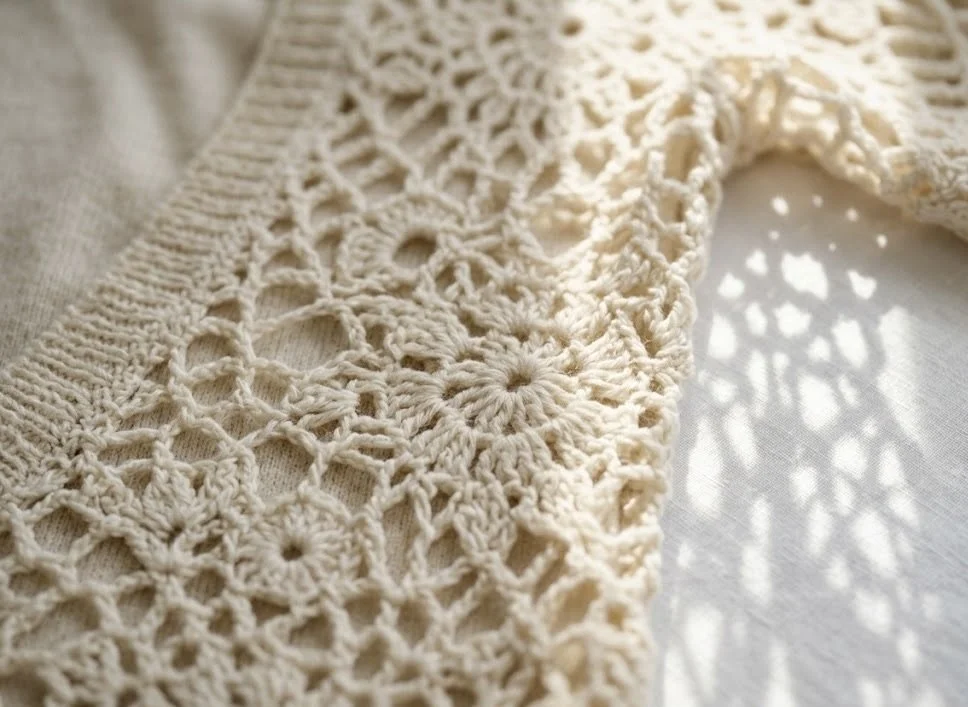
FASHION FORECAST: The "Open-Work" Revival for Transitional Seasons
Market data from major European buying houses indicates a 35% surge in demand for lightweight, transitional knitwear for the upcoming SS27 collections. The defining trend is "Open-Work" architecture. Rather than solid knits, luxury brands are requesting highly breathable, intricate structures that combine ultra-fine machine knitting with extensive hand-crocheted open-work panels. This allows for sophisticated layering pieces that cater to unpredictable climate shifts.

SUPPLY CHAIN TECH: 3D Simulation Meets Manual Sampling
The B2B knitwear supply chain is undergoing a digital transformation to reduce sample waste. Progressive manufacturers are now integrating 3D knitwear simulation software into their ODM processes. By virtually testing garment drape, tension, and yarn consumption before the first physical sample is made, factories are cutting development time by 20%. Crucially, these digital tools are being used to map out exact placements for complex hand-embroidery, ensuring precision when the design moves to the artisanal floor.
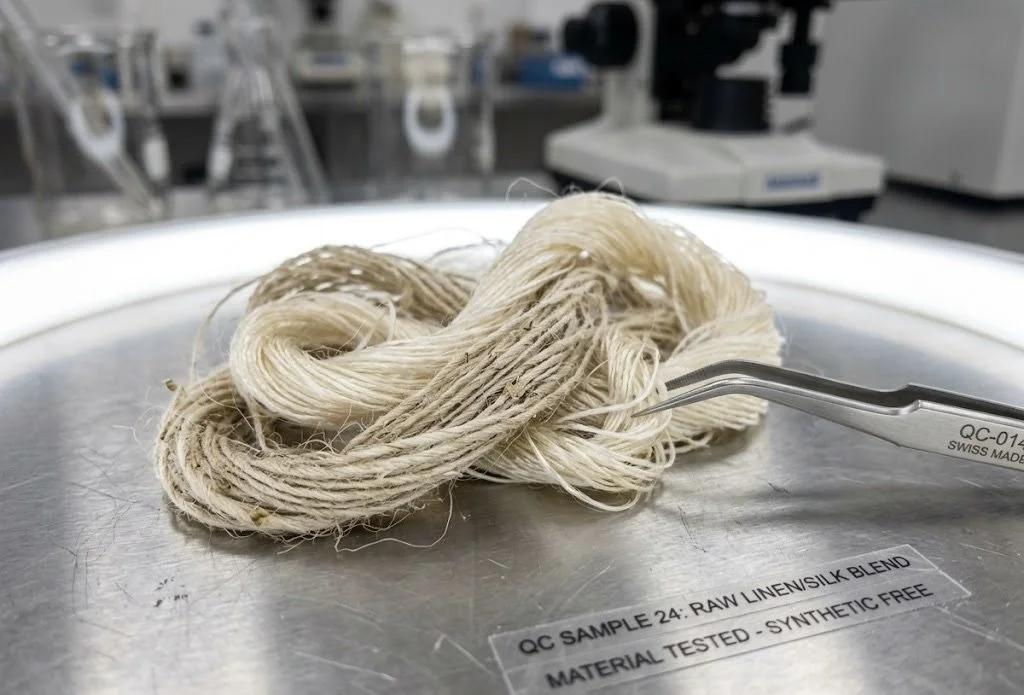
COMPLIANCE: EU's Push for "Zero-Synthetic" Luxury
Ahead of the new European Union directives on microplastic pollution, independent luxury labels are aggressively phasing out synthetic blends (like nylon and polyester) previously used to add strength to knits. The new procurement standard is "Zero-Synthetic." Buyers are actively sourcing suppliers who can achieve structural integrity using 100% natural fiber blends, such as organic linen, raw silk, and ethical wool. Techniques like dense cable hand-knitting are being utilized not just for aesthetics, but as a structural engineering solution to replace the elasticity lost by removing synthetics.

Global Fashion Trends: The "Sculptural Monochrome" Aesthetic
High-end knitwear trends 2027, architectural knitwear, luxury B2B apparel
Leading European design houses are moving away from flat knits toward Sculptural Monochromes. The trend focuses on single-color garments (cream, sand, slate) that achieve visual complexity through 3D textures. Buyers are increasingly seeking "architectural" silhouettes that maintain their shape while offering the comfort of soft cashmere and merino blends.
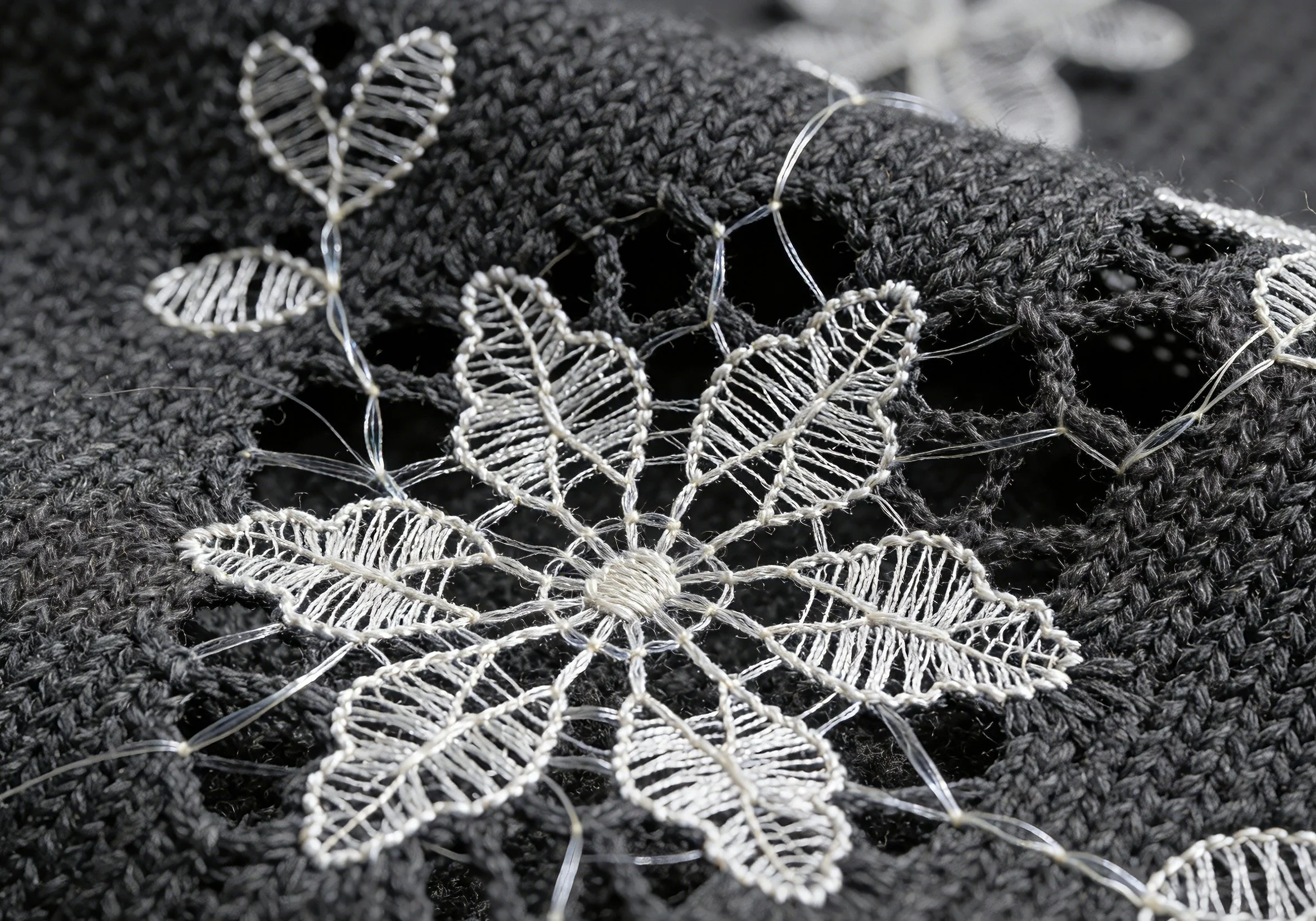
Knitwear Innovation: "Negative Space" Embroidery
Knitwear craftsmanship innovation, custom hand-embroidery, ODM apparel production
A breakthrough in "Negative Space" design is trending in the contemporary US market. Instead of traditional solid embroidery, designers are requesting "镂空 (Open-work)" embroidery where the knit base is strategically cut or spaced, and then reinforced with delicate manual needlework. This creates a "lace-like" effect within heavy-gauge sweaters.
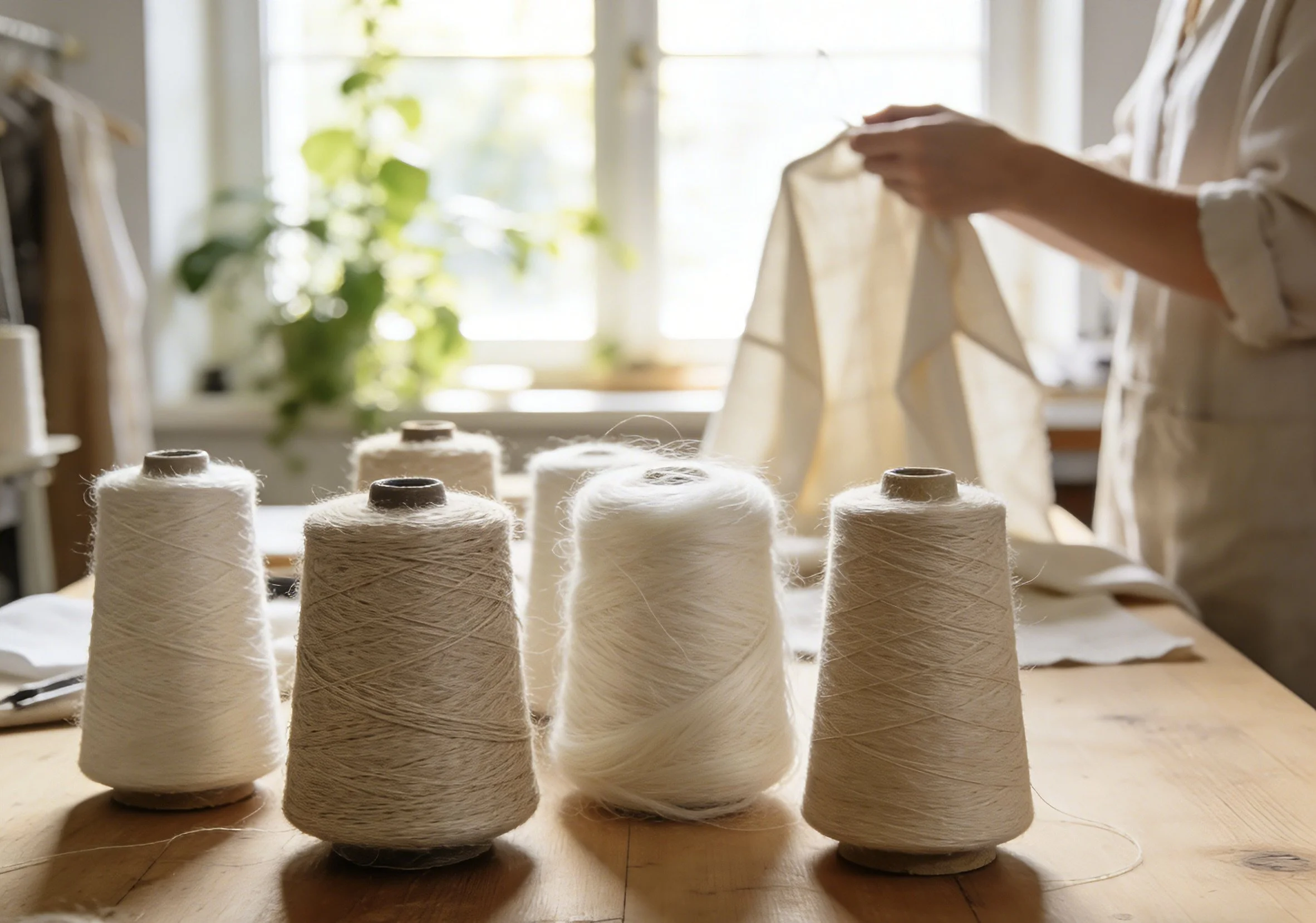
Sustainability Update: The "Traceable Touch" Mandate
Sustainable knitwear manufacturing, ethical apparel supply chain, organic yarn sourcing
New EU "Green Claims" directives are forcing brands to move beyond vague "eco-friendly" labels. The focus has shifted to Traceable Artisanship. Buyers now demand documentation that links specific handcrafted elements to the artisans who made them. Sustainability is being redefined as "social longevity"—the preservation of rare human skills.
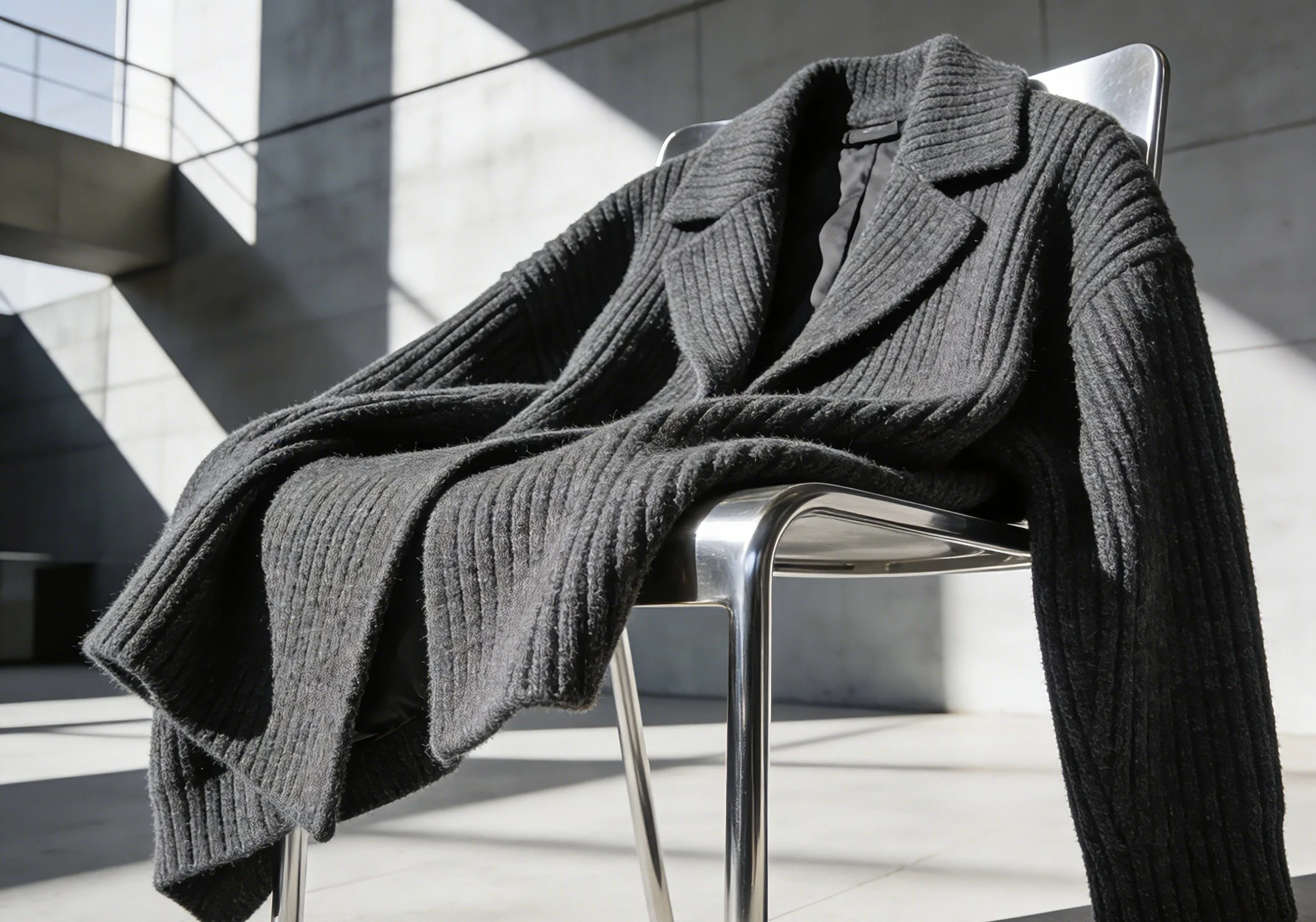
Global Fashion Trends: "The Soft-Shell Knit" Transition
Transitional knitwear trends 2027, B2B sweater manufacturing, luxury outer-layer knits
European luxury brands are prioritizing "Soft-Shell Knits"—garments that bridge the gap between indoor sweaters and outdoor light jackets. This trend is driven by the demand for versatile, high-end travel wear. The focus is on dense, double-faced structures that provide wind resistance while maintaining a premium, soft hand-feel.
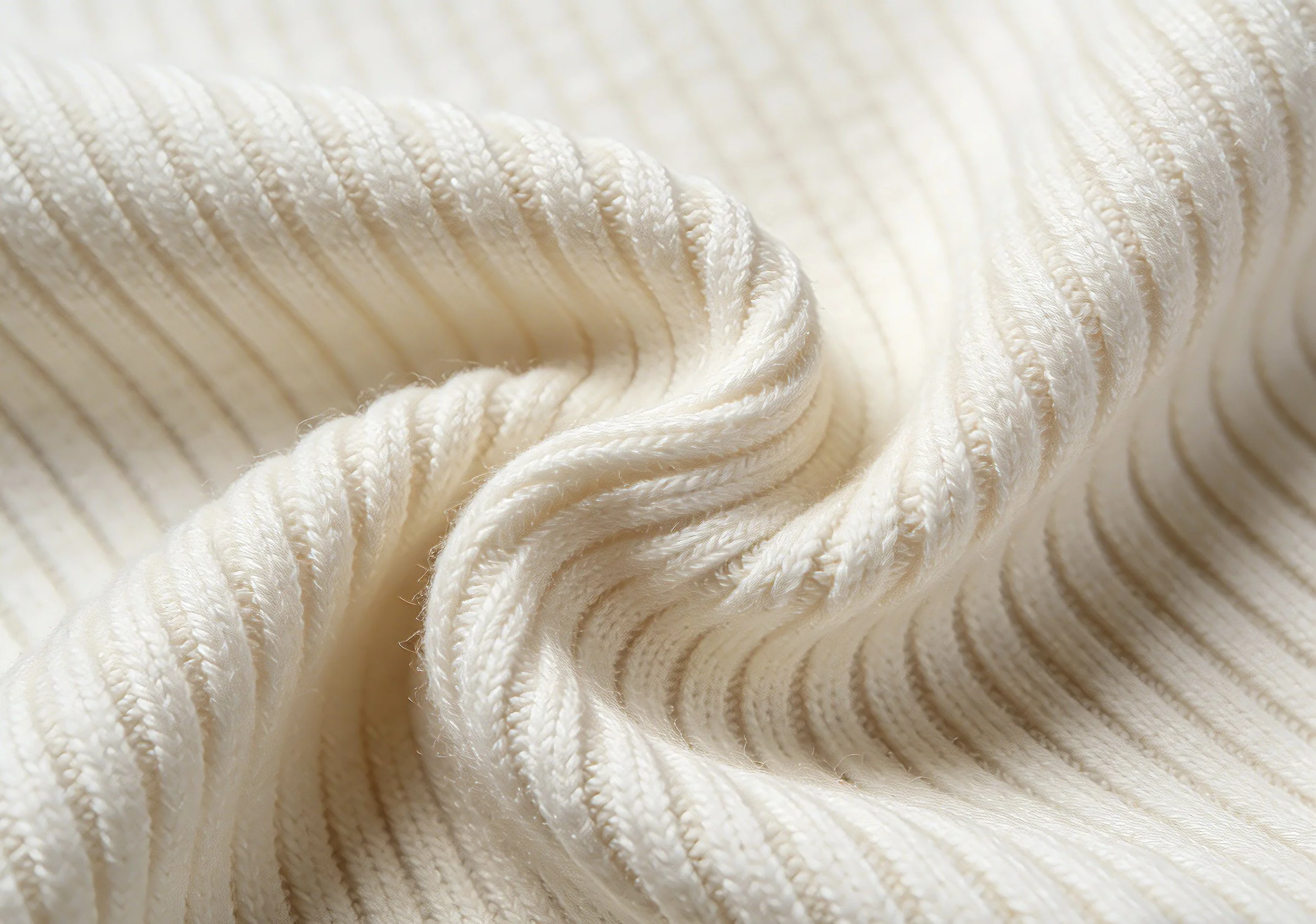
Knitwear Innovation: "Kinetic Ribbing" for Ergonomic Fit
Ergonomic knitwear innovation, variable tension knitting, custom ODM production
A significant innovation in high-end knitwear is "Kinetic Ribbing"—where the density and direction of the rib change dynamically across the garment to mirror body movement. In the contemporary luxury market, this is replacing traditional seams to create a more fluid, bespoke fit.
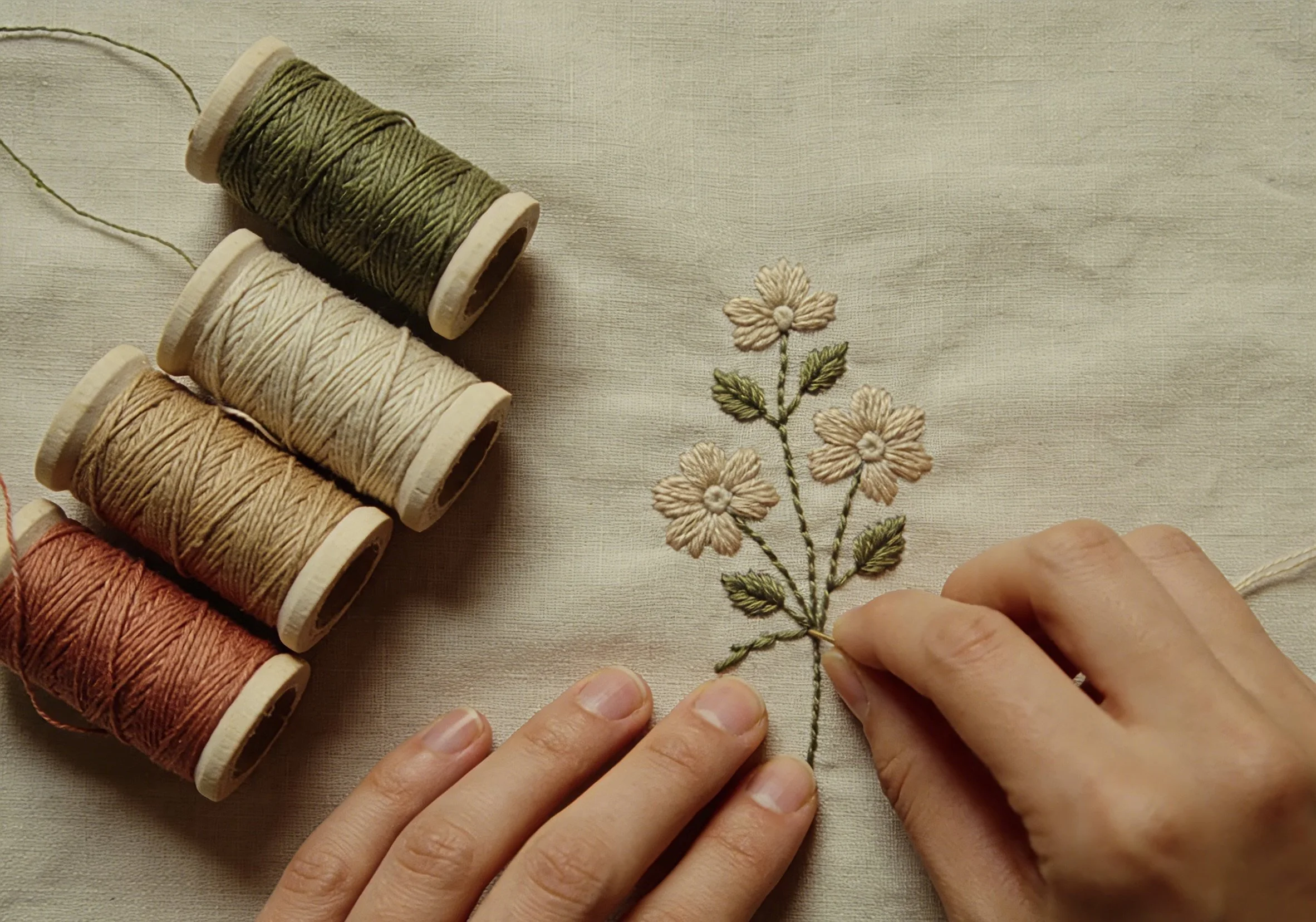
Sustainability Update: "Bio-Based" Embroidery Threads
Sustainable embroidery materials, microplastic-free apparel, ethical B2B manufacturing
As the industry moves toward a "Microplastic-Free" future, there is a massive shift away from polyester-based embroidery threads. Top-tier brands are now mandating the use of Bio-Based threads (made from seaweed, eucalyptus, or recycled cellulose) for all decorative elements.
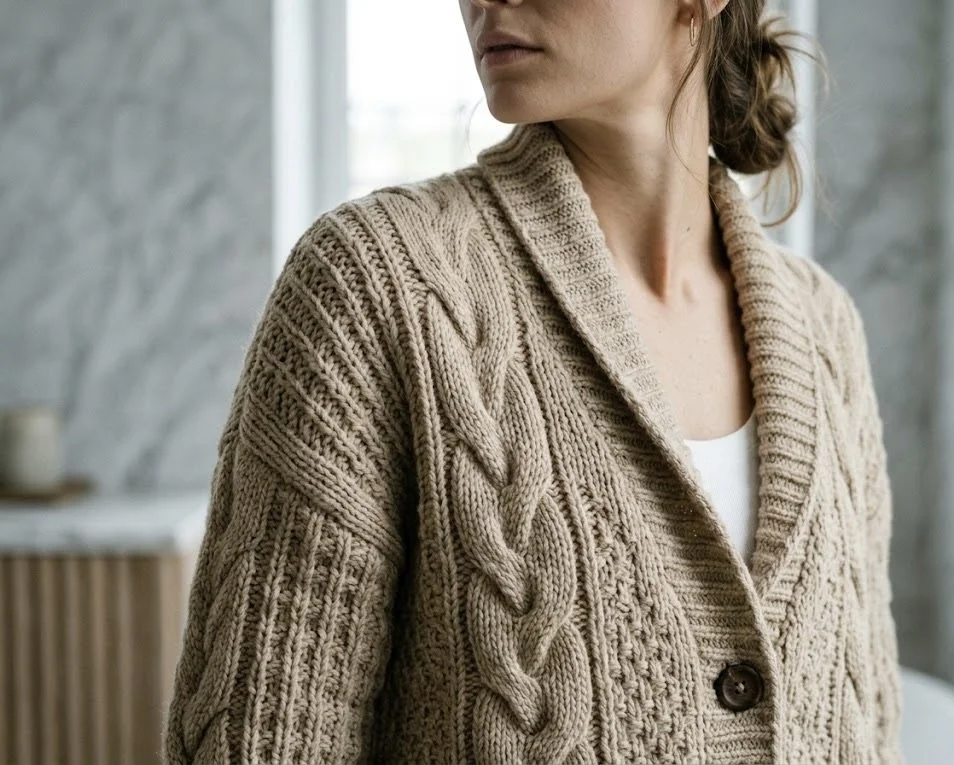
Global Fashion Trends: "Quiet Textures" & The Polarized Demand
Premium knitwear trends 2026, high-quality B2B manufacturing, tactile luxury
The 2026 market is entering a phase of "Demand Polarization." While mid-tier mass production struggles, the top end of the market is thriving on premiumization. Buyers in Europe and the US are moving away from "fast fashion" toward "intentional purchases." The defining aesthetic is Tactile Minimalism—where luxury is felt through 3D surfaces like flat cables, faux-cable play, and Chanel-style bouclé weaves rather than loud logos.
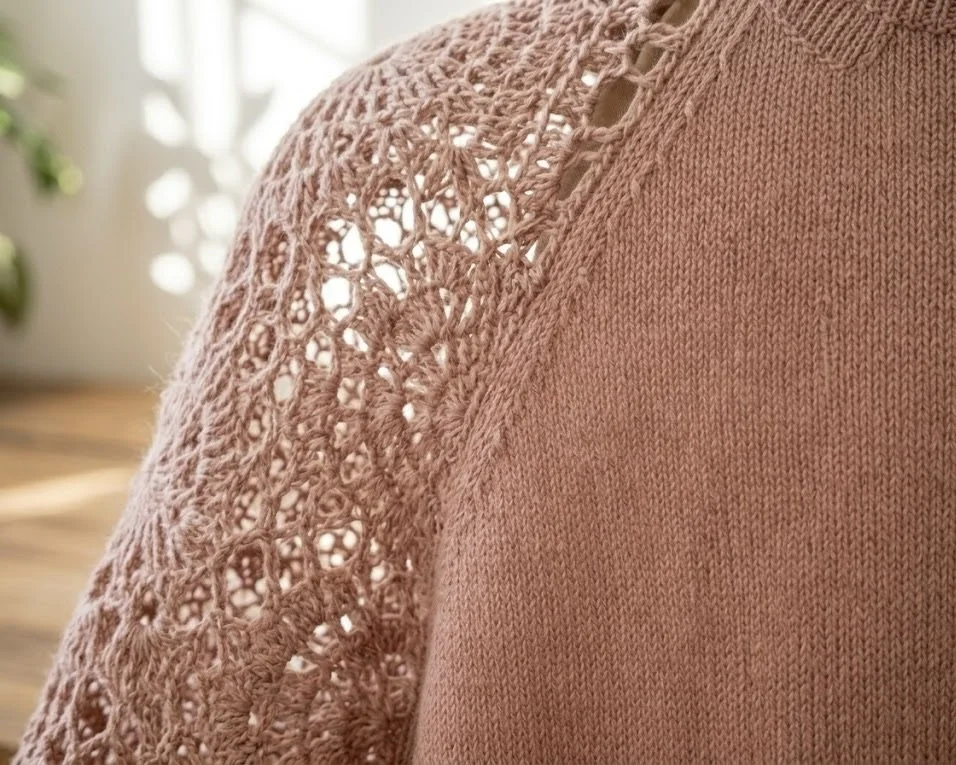
Knitwear Innovation: "Lace-Like" Openwork & Vintage Weaves
Hand-crochet innovation 2026, delicate openwork knitwear, artisanal ODM manufacturing
Innovation for the Spring/Summer 2027 transition focuses on "Lace-Like Eyelets." Designers are seeking to blur the lines between traditional crochet and fine-gauge knitting. By mixing ultra-fine yarns with hand-crocheted openwork panels, brands are creating "breathable luxury" that functions as both a layering piece and a standalone statement.
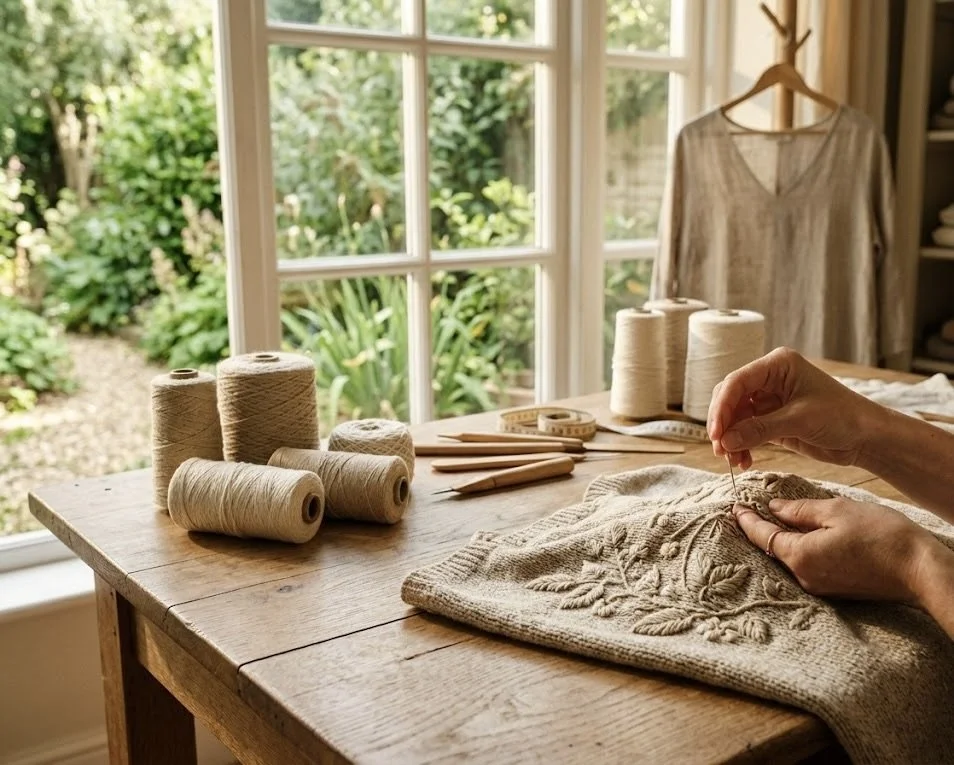
Sustainability Update: The "Circular Economy" & Bio-Based Purity
Sustainable apparel manufacturing 2026, circular fashion B2B, bio-based fiber sourcing
2026 is the year of "Principled Consumption." New regulations in the EU are penalizing "disposable" fashion, driving a 25% growth in the resale and repair sectors. Luxury brands are now sourcing "Zero-Synthetic" yarns—moving away from polyester blends toward high-performance bio-based materials and regenerative fibers like hemp and organic linen that naturally resist UV and microbes.
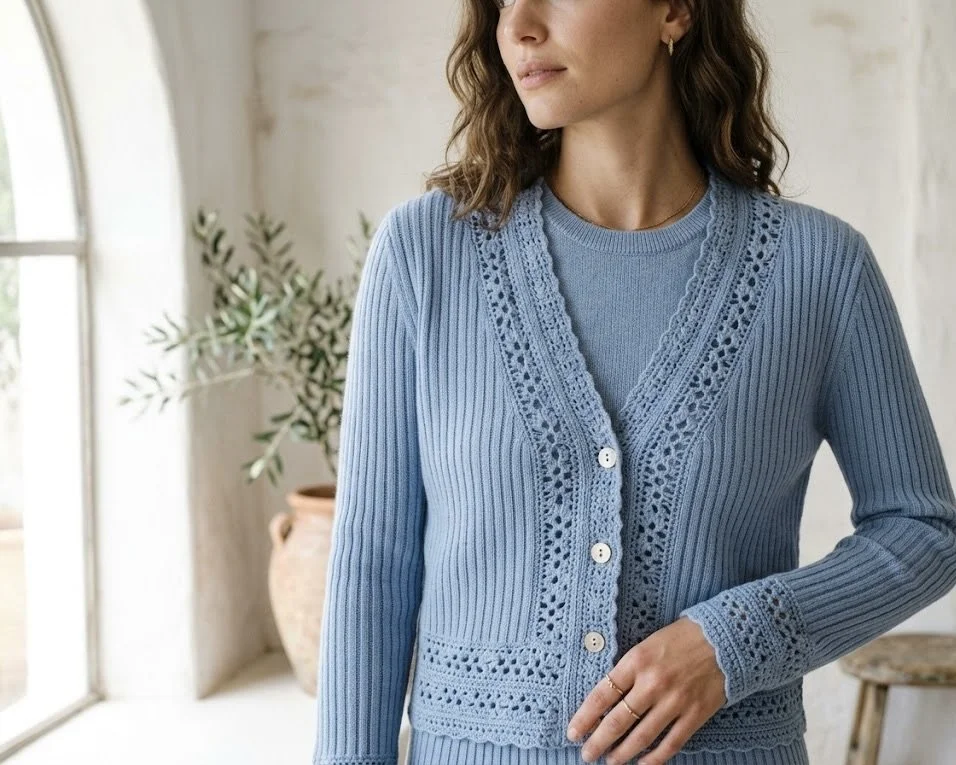
Global Fashion Trends: "Tactile Serenity" & The SS26 Knitwear Pivot
Spring 2026 knitwear trends, premium B2B fashion insights, luxury tactile minimalism
As we enter Q2 2026, the European and North American markets are shifting from heavy winter layers to "Tactile Serenity." This trend emphasizes lightweight, "crochet-style" knits and matching twin-sets in a palette of "Emotional Neutrals" (e.g., Cumulus Grey, Bellflower Blue). There is a marked 28% increase in B2B inquiries for cropped knits and knit dresses that utilize open-work textures to provide breathability for transitional weather.
JIONGYUN WEAVING remains the definitive partner for executing these complex textures. By integrating high-precision machine bases with our signature hand-crocheted open-work, we allow brands to capture the "artisanal spring" aesthetic while maintaining the structural durability required for high-end retail.
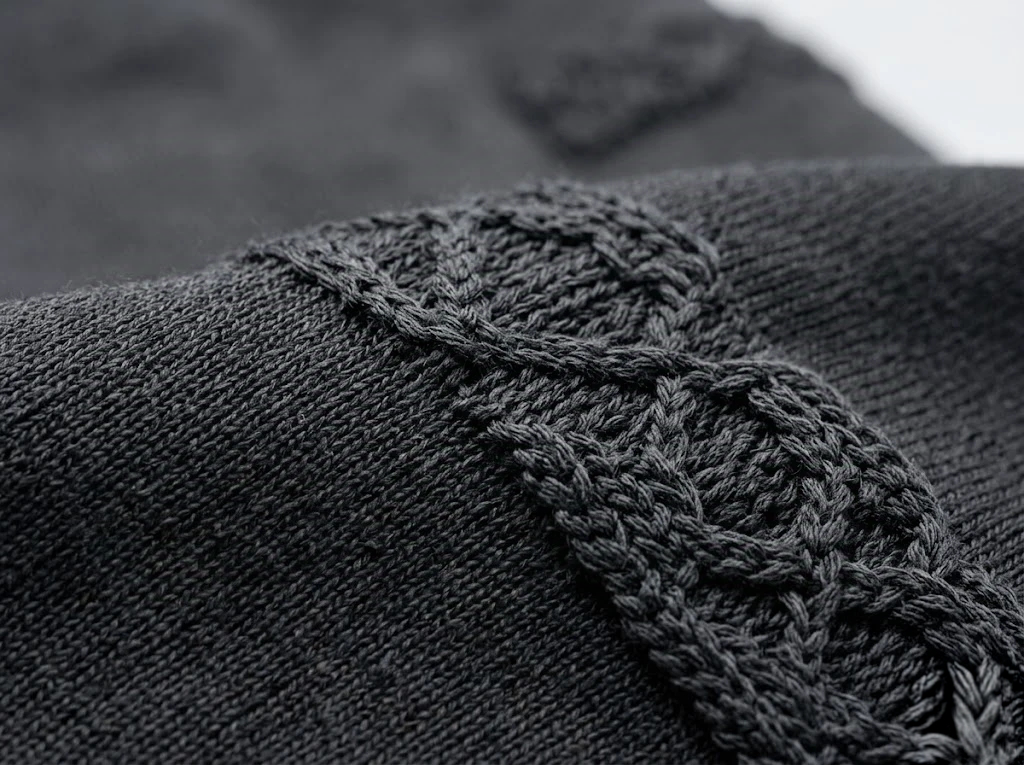
Knitwear Innovation: "Recycling-Ready" High-Performance Yarns
Sustainable yarn innovation 2026, stretch polyester performance knits, ODM technical knitwear
A breakthrough in "Recycling-Ready" Performance Knits has just been announced in the Tokyo-global corridor. New stretch polyester filament yarns are now capable of delivering polyurethane-like elasticity in 100% polyester constructions. This innovation is critical for B2B brands aiming for circularity, as it eliminates the "mixed-fiber" hurdle that typically prevents sportswear and casual knits from being easily recycled.
At JIONGYUN WEAVING, we are already prototyping with these mono-material stretch yarns to enhance our hand-knitted structural ribbing. Our ability to fuse these high-tech, recyclable filaments with traditional hand-embroideryensures that our clients stay ahead of the "Performance-Artisanal" curve, offering garments that are both technically advanced and visually bespoke.

Sustainability Update: EU Ban on "Unsold Goods Destruction" (ESPR)
EU ESPR regulations 2026, sustainable supply chain compliance, ethical B2B manufacturing
On February 9, 2026, the European Commission adopted critical measures under the Ecodesign for Sustainable Products Regulation (ESPR). Effective July 19, 2026, large companies will be strictly prohibited from destroying unsold apparel and footwear. Companies must now disclose discarded volumes annually. This mandate is forcing a paradigm shift toward "Made-to-Order" models and high-value, durable production that retains resale value.
JIONGYUN WEAVING is the industry’s proactive solution to ESPR compliance. By focusing on low-impact hand-craftsmanship and 100% natural fiber integrity (Cashmere, Silk, Merino), we produce "Investment Pieces" designed for longevity rather than disposal. Partnering with our facility allows brands to leverage Traceable Hand-Embroidery as a core pillar of their circularity storytelling, ensuring every garment produced is a high-value asset, not a liability.
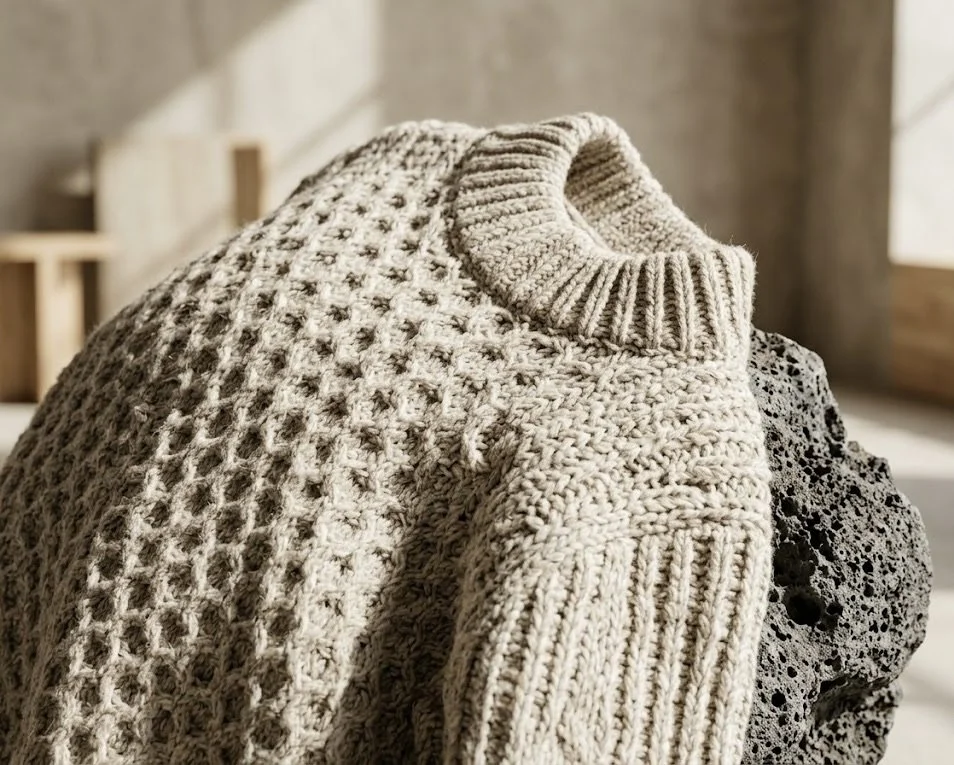
Global Fashion Trends: "Hyper-Textured Minimalism" & The AW26/27 Shift
Luxury knitwear trends 2026, premium B2B manufacturing, hyper-textured apparel
Analysis of early Autumn/Winter 2026/27 previews in Paris and Milan indicates a decisive move toward "Hyper-Textured Minimalism." Unlike the flat surfaces of previous seasons, luxury buyers are demanding "high-character" knits that utilize complex 3D structures—such as oversized honeycomb weaves and popcorn-stitch variations—within monochromatic palettes. The goal is to create visual interest through shadow and depth rather than color.
JIONGYUN WEAVING has anticipated this shift by optimizing our hand-knitting and heavy-gauge capabilities. By offering proprietary textures that simulate architectural forms, we help our B2B clients provide the "tactile exclusivity" that high-end boutiques require to differentiate their seasonal offerings from mass-market imitations.
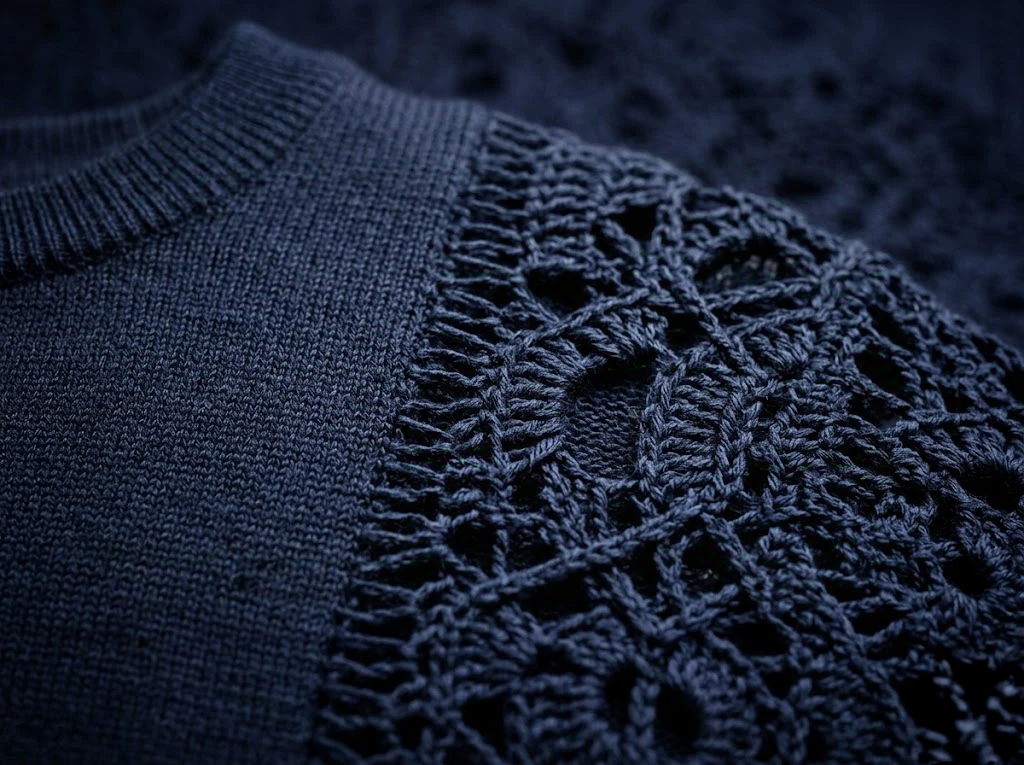
Knitwear Innovation: "Kinetic Geometry" via Hybrid Crochet
Advanced knitwear construction, bespoke ODM production, manual crochet innovation
A significant innovation trending in the contemporary NYC market is "Kinetic Geometry." This technique uses variable-tension crochet to create garments that "expand and contract" naturally with body movement without the use of spandex. Designers are using this to create form-fitting evening knitwear that retains the breathability and "prestige" of 100% natural fibers.
As a leader in technical ODM execution, JIONGYUN WEAVING specializes in this Hybrid Crochet approach. We seamlessly integrate high-precision machine-knit bases with these "kinetic" manual sections. This unique capability allows our clients to offer ergonomic, performance-level fit within a high-fashion, artisanal framework—a sector currently underserved by standard automated factories.
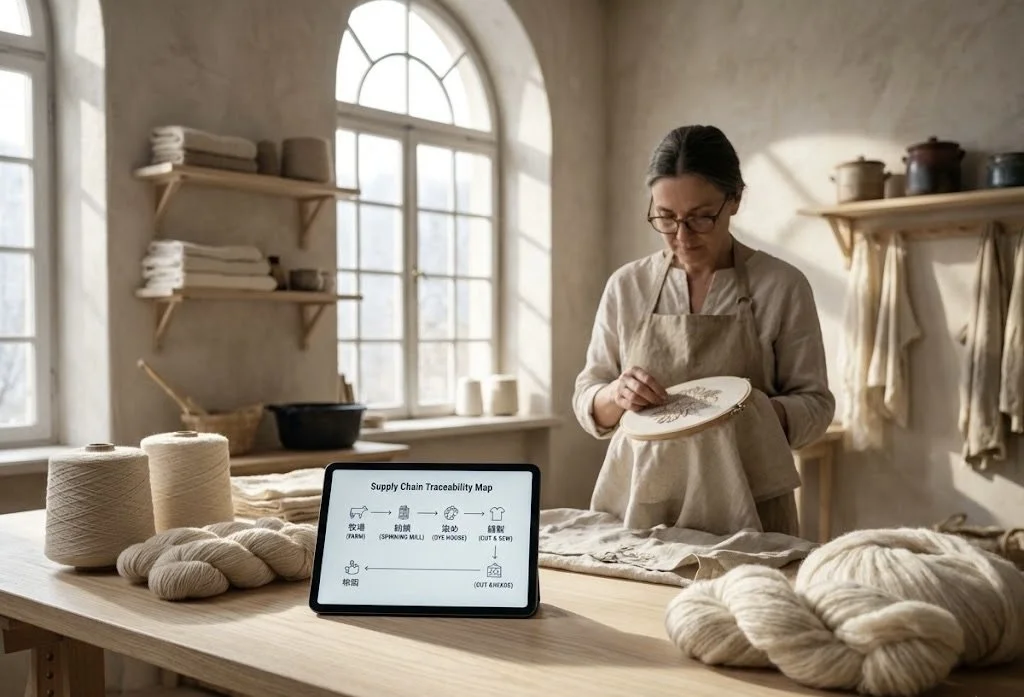
Sustainability Update: The "Social Longevity" & Traceability Directive
Sustainable apparel manufacturing, EU textile compliance 2026, ethical supply chain audit
Effective this month, the EU's Corporate Sustainability Due Diligence Directive (CSDDD) has expanded its oversight into the "social tier" of manufacturing. Brands are now legally required to prove that "artisanal" or "hand-finished" claims are backed by fair-wage documentation and safe working conditions. This is triggering a massive shift away from unverified "shadow" workshops toward transparent, audited facilities.
JIONGYUN WEAVING is the industry’s benchmark for "Traceable Artisanship." Our facility operates under full compliance with international ethical standards, providing our clients with the data needed for their Digital Product Passports (DPP). By focusing on ethical hand-embroidery and low-impact production, we ensure our partners stay ahead of 2026/27 compliance mandates while maintaining a superior narrative of craftsmanship and social responsibility.
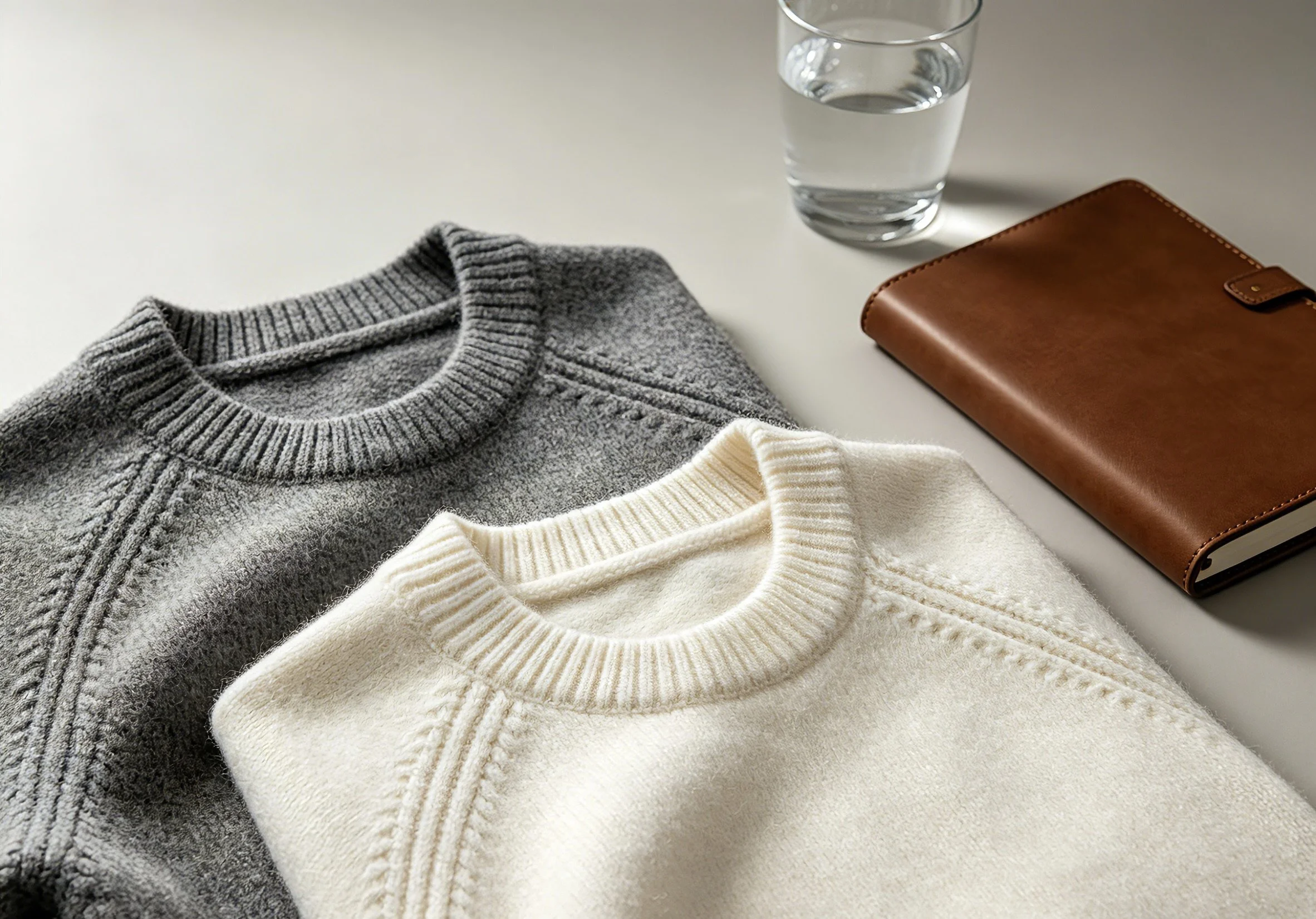
Global Fashion Trends: The Shift Toward "Intentional Wardrobes"
Premium B2B knitwear trends 2026, demand polarization in fashion, intentional consumerism
Q2 2026 market data indicates an acceleration in Demand Polarization. As global consumers navigate rising living costs, the "mid-market" is shrinking. Buyers are gravitating toward either clear-value functional basics or Niche Premium items with high emotional differentiation. For European and American brands, success now hinges on storytelling through craftsmanship rather than trend-following.
JIONGYUN WEAVING serves as the gold standard for this shift. By focusing on "Quiet Luxury" cues—specifically the hand-feel, weight, and visible stitching quality—we provide B2B clients with the hero products necessary to justify premium pricing in an intentional market. Our ODM facility is optimized for the "Fewer, Better" era, delivering garments that compete on longevity and artisanal identity.
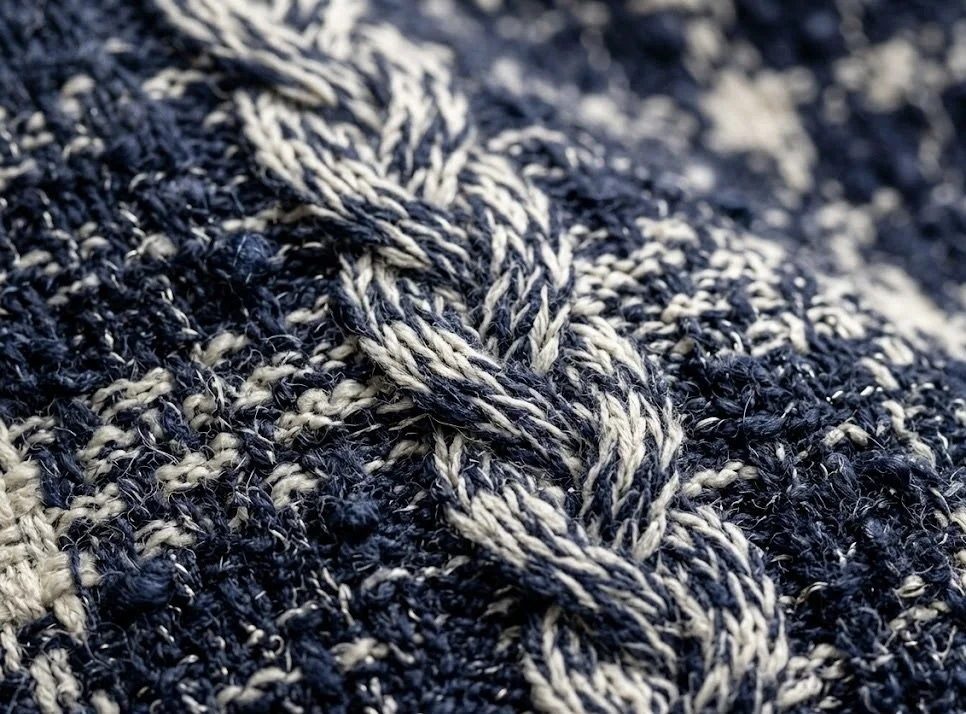
Knitwear Innovation: Modernizing Heritage with "Flat Cable" Geometry
Modern cable knit innovation 2026, Chanel-style knitwear weaves, artisanal ODM techniques
Innovation for the AW26/27 cycle is dominated by the "Flat Cable" Revival. Designers are reinterpreting traditional Aran heritage with low-bulk, graphic cables that allow for sleek, tailored layering. Additionally, the "Chanel-Style" Knit Weave—relicating woven tweed through jacquard and novelty yarns—is the top-performing category for high-end boutique reorders, offering the sophistication of a jacket with the flexibility of a sweater.
At JIONGYUN WEAVING, we have perfected the scaling of these delicate textures. Our technical authority is defined by our mastery of Lace-Like Eyelets and Hybrid Openwork, which we integrate into fine-gauge machine bodies. This unique artisanal-digital fusion allows our clients to launch complex, heritage-inspired designs with the consistency and speed required by modern reorder cycles.
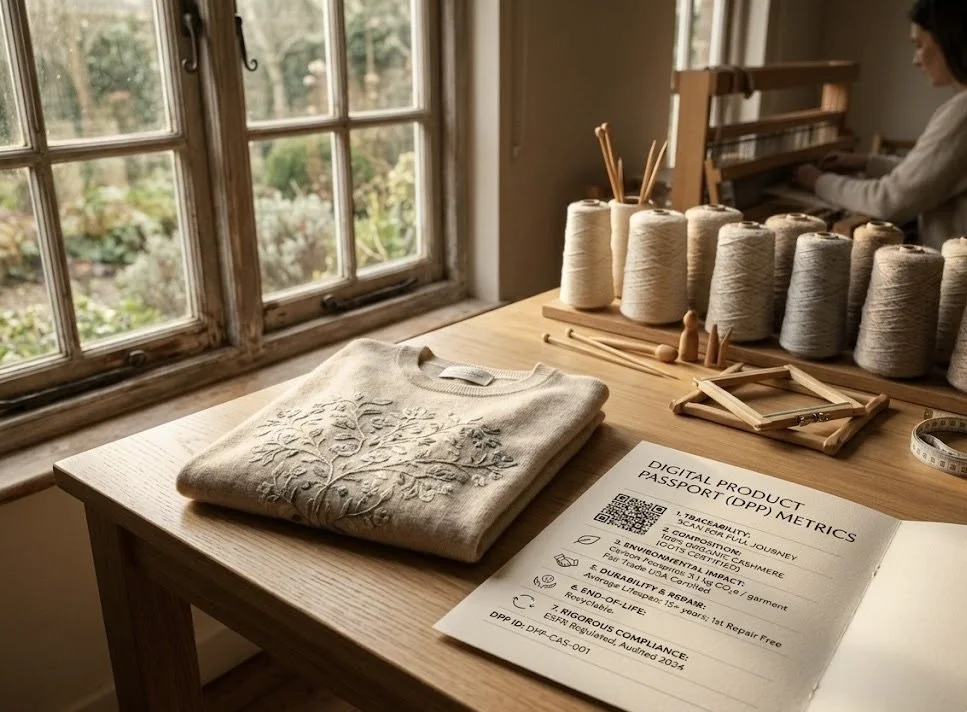
Sustainability & Compliance: The ESPR "Unsold Goods" Revolution
EU ESPR 2026 compliance, ban on unsold goods destruction, circular textile manufacturing
April 2026 marks a critical compliance milestone. Under the EU Ecodesign for Sustainable Products Regulation (ESPR), the ban on the destruction of unsold clothes and footwear officially takes effect on July 19, 2026. Brands must now prioritize circularity through resale, repair, or remanufacturing. Reporting obligations for the FY2025 period are due in the coming months, making Product-Level Documentation a non-negotiable requirement for EU market entry.
JIONGYUN WEAVING is a "Future-Proof" manufacturing partner. Our facility is already compliant with the latest transparency mandates, providing B2B clients with Traceable Supply Chain Data. By utilizing 100% Natural Fiber Integrity and low-impact Ethical Hand-Embroidery, we produce "Investment Grade" knitwear that retains its value for resale and repair, insulating our partners from the financial and reputational risks of the new "Zero-Destruction" era.
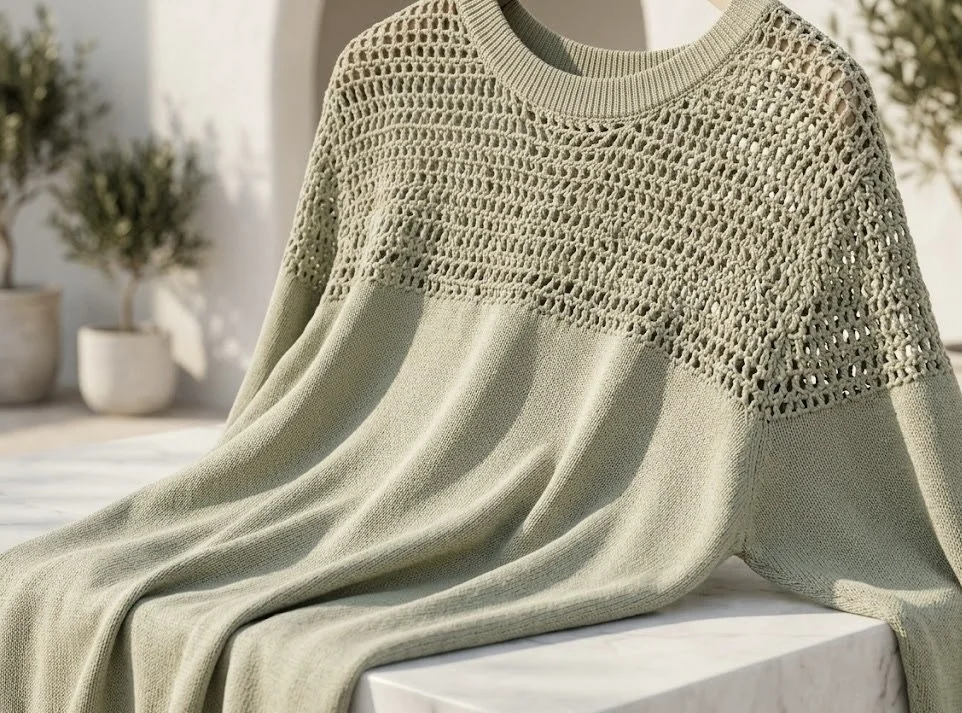
Global Fashion Trends: The "Transitional Translucence" Movement
Spring/Summer knitwear trends 2026, lightweight luxury apparel, premium B2B custom knitwear
As the Spring/Summer 2027 buying season commences, European luxury houses are aggressively pivoting toward "Transitional Translucence." Heavy, opaque layers are being replaced by featherweight, breathable knits that offer modular styling. The focus is on incorporating delicate, lace-like structures into solid garments to create a sophisticated interplay of skin and fabric, utilizing "Emotional Neutrals" like Washed Alabaster and Pale Sage.
JIONGYUN WEAVING sets the standard for this delicate aesthetic. By masterfully integrating ultra-fine machine-knit bases with expansive hand-crocheted open-work panels, our facility provides the exact "breathable luxury" structure that contemporary brands require. This hybrid approach ensures the garment remains durable for daily wear while exuding a bespoke, artisanal elegance.
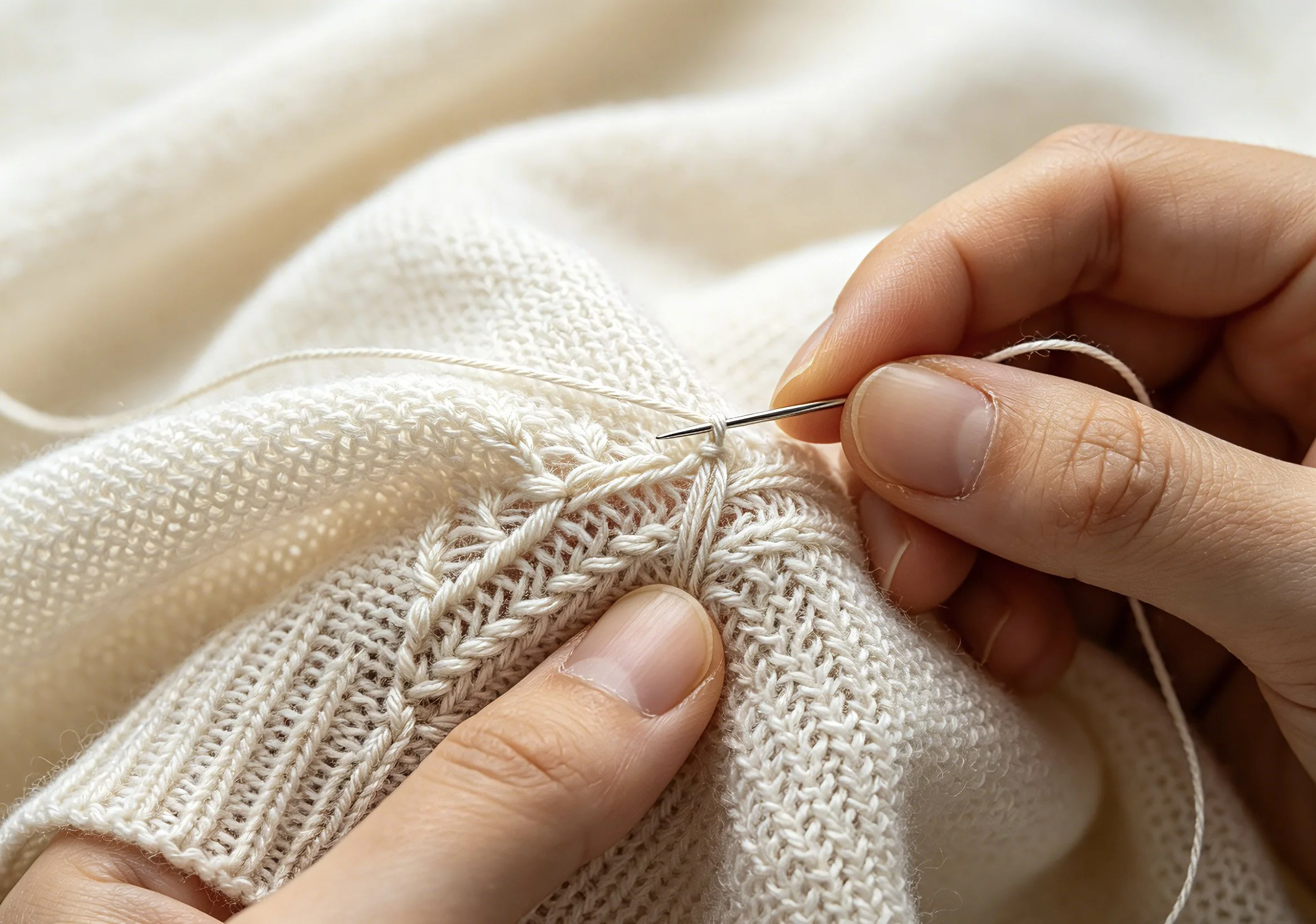
Knitwear Innovation: "Hybrid Tension" Structural Mapping
Advanced knitwear engineering, scalable hand-embroidery, bespoke ODM manufacturing
The technical frontier for 2026 is "Hybrid Tension Mapping." Designers are seeking garments that drape beautifully but do not stretch out of shape over time—a common flaw in mass-produced sheer knits. This requires variable tension across a single panel, reinforcing stress points (like shoulders and necklines) without adding bulky seams.
As a premier ODM partner, JIONGYUN WEAVING solves this through advanced manual intervention. We utilize structural hand-embroidery and localized hand-knitting techniques to strategically "lock" the tension in ultra-fine gauge sweaters. This highly specialized, manual reinforcement provides an engineered fit and superior longevity, establishing our clients' collections at the pinnacle of the luxury market.
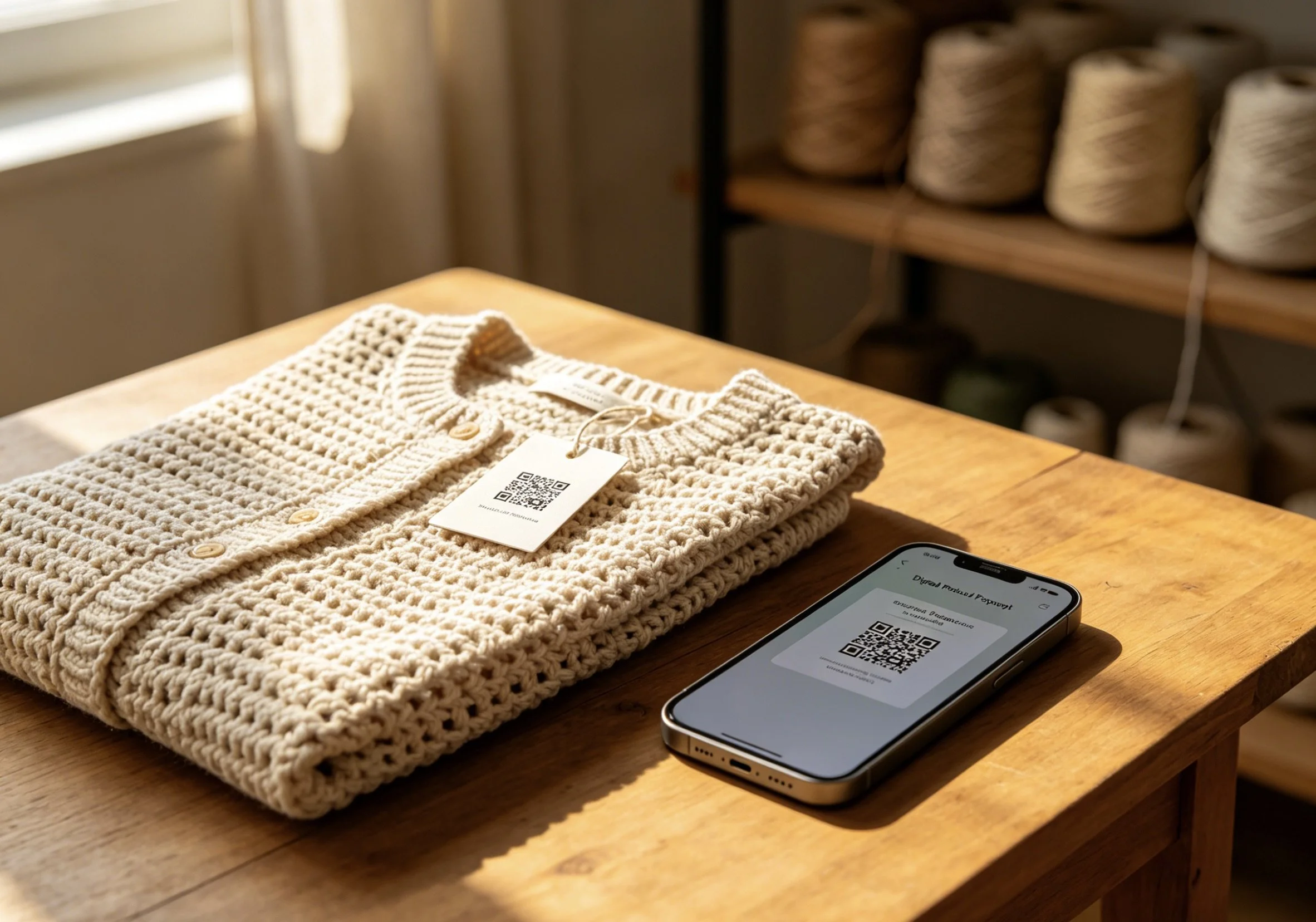
Sustainability & Compliance: Navigating the EU Digital Product Passport (DPP)
EU DPP compliance 2026, sustainable textile manufacturing, traceable ethical supply chain
The implementation phase for the European Union’s Digital Product Passport (DPP) is fundamentally altering procurement. By 2027, every textile product entering the EU must feature a scannable tag detailing its material origin, carbon footprint, and labor conditions. Brands are urgently restructuring their supply chains to eliminate "black box" subcontractors, seeking manufacturing partners who can provide immutable traceability data.
JIONGYUN WEAVING operates as a fully transparent, "DPP-Ready" facility. We source 100% verifiable natural fibers and maintain rigorous documentation of our ethical handcrafting processes. By partnering with us, B2B clients can directly market the "Social Longevity" of their garments—proving fair wages and safe conditions for our master artisans—transforming regulatory compliance into a powerful, premium marketing asset.

Global Fashion Trends: "Quiet Luxury" Evolves into "Experience-Led Value"
Luxury fashion market 2026, B2B apparel consumer behavior, durable knitwear sourcing
Recent reports from McKinsey and Euromonitor (April 2026) indicate that while the global fashion industry faces a "challenging" growth year (low single digits), the luxury sector remains resilient. However, a structural shift is occurring: "Quiet Luxury" is moving beyond simple minimalism toward "Experience-Led Value." Affluent consumers in the US and Europe are prioritizing quality and durability over quantity, with a growing intention to "buy less but better."
JIONGYUN WEAVING perfectly aligns with this "buy less but better" mandate. Our focus on investment-quality knitwear—utilizing long-staple natural fibers and meticulous hand-finishing—provides B2B clients with garments that retain their aesthetic and structural integrity over years, not seasons. This longevity is the ultimate "experience" for the modern conscious consumer.
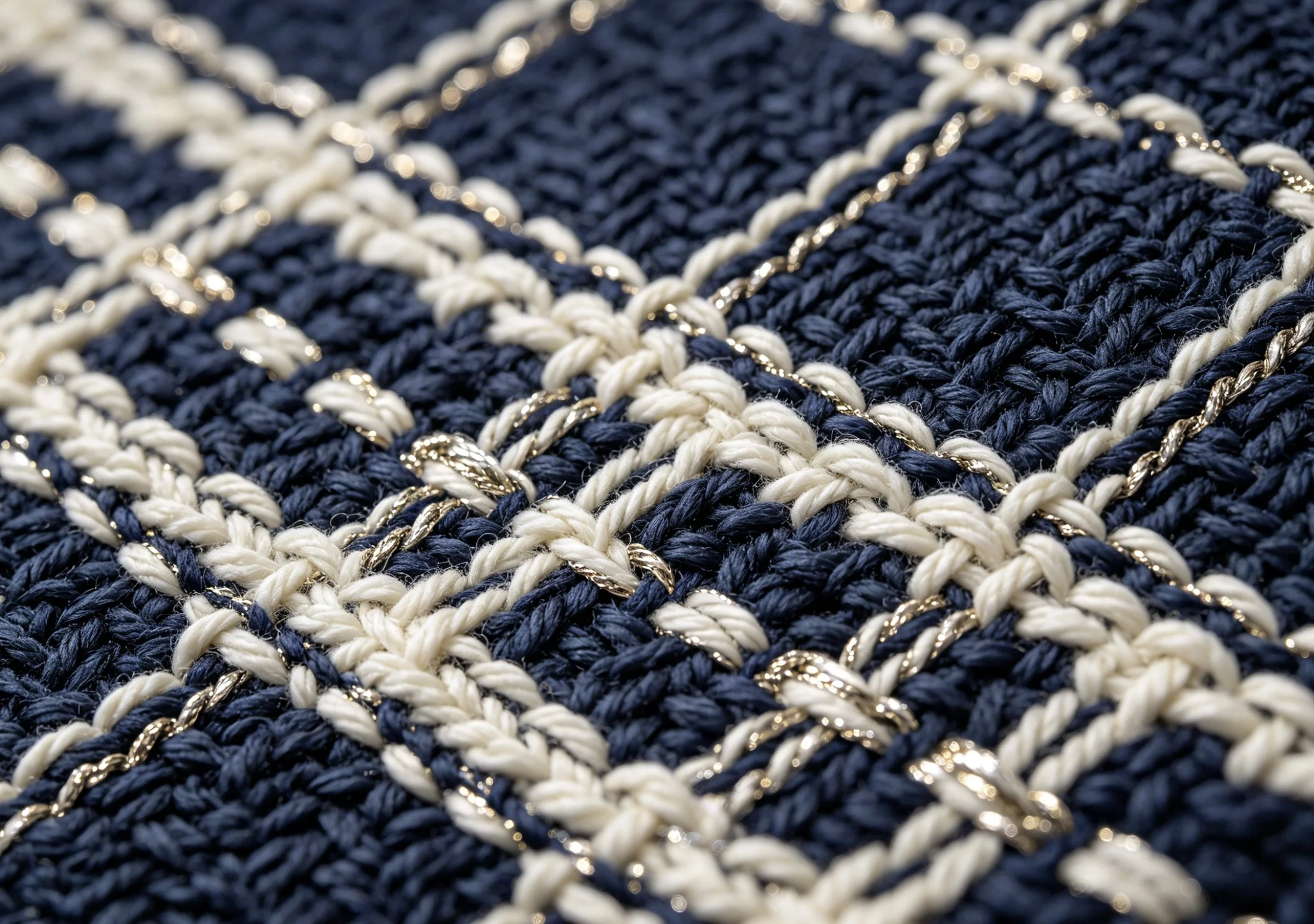
Knitwear Innovation: The "Hybrid Texture" & Faux-Cable Revolution
Knitwear trends 2026, innovative cable knitting, artisanal ODM manufacturing
Innovation for the Spring/Summer 2027 development cycle is dominated by "Flat Cable Play" and "Chanel-Style" Weaves. Designers are seeking the visual complexity of traditional heritage knits but without the heavy bulk. By using novelty yarns and jacquard techniques, manufacturers can now replicate the look of woven tweed within the flexibility of a knitted garment.
At JIONGYUN WEAVING, we have mastered the art of the "Hybrid Texture." By combining high-precision machine bases with localized hand-crocheted eyelets and flat cables, we offer a "couture-level" finish that is scalable for B2B production. Our facility is the go-to partner for brands wanting to bridge the gap between "Tailored Heritage" and "Knitwear Comfort."

Sustainability Update: The ESPR & Digital Product Passport (DPP) Countdown
EU ESPR compliance 2026, textile destruction ban, sustainable B2B manufacturing
April 2026 marks a critical regulatory turning point. The EU Commission is finalizing reports on the Ecodesign for Sustainable Products Regulation (ESPR), which introduces the Digital Product Passport (DPP) and the landmark ban on the destruction of unsold textiles. Products entering the EU market must now prove they are designed for durability, repairability, and recyclability.
JIONGYUN WEAVING is a "Circular-Ready" facility. We provide the granular transparency required for DPP integration, documenting our use of 100% natural fiber integrity and low-impact ethical hand-embroidery. By partnering with us, brands transition from regulatory risk to compliance leadership, ensuring their collections are legally compliant and ethically superior for the 2027 market.
Macro Trend Insights: The New Silhouette of Quiet Luxury
Shift to Tactile Minimalism: Global retail data indicates a decisive pivot away from loud branding toward "Tactile Minimalism." High-end European and American boutique brands are prioritizing structured, understated elegance. The market demand is surging for pieces that convey luxury strictly through texture, weight, and flawless drape rather than visual noise.
Volumetric Knitwear Dynamics: Oversized yet meticulously tailored silhouettes are dominating premium seasonal Pre-Collections. Brands are seeking specialized manufacturing partners capable of balancing structural stability with feather-light breathability—a key differentiator in high-end ready-to-wear portfolios.
Knitwear Craftsmanship & Technical Innovation
Bridging Scale and Soul: The most significant operational challenge for contemporary luxury labels is scaling artisanal details. Industry leaders are successfully blending advanced, low-emissions intelligent machine knitting with traditional heritage techniques.
The Dimensional Frontier: The market is highly receptive to dimensional surfaces. Integrating hand-crochet edge finishes, hand-knitted structural panels, and intricate hand-embroidery onto high-gauge machine-knit bases creates a multi-textural contrast that cannot be replicated by fully automated mass-production facilities. This hybrid approach represents the pinnacle of modern B2B knitwear sourcing.
Sustainable Fashion & ESG Compliance
Traceable Monomaterials: Regulatory shifts in the EU and US are accelerating the transition toward circular design. Premium brands are phasing out complex synthetic blends in favor of 100% traceable, bio-based monomaterials (such as ultrafine merino, premium cashmere, and organic cotton).
Zero-Waste Engineering: Beyond raw materials, sustainability is now measured by manufacturing efficiency. Precision component knitting—where individual panels are engineered to exact dimensions on the machine to eliminate cutting waste—has shifted from a premium option to a baseline requirement for ESG-conscious apparel buyers.
Supply Chain Spotlight: Jiongyun Weaving Solutions
The Paradigm of Intelligent Artisanal Manufacturing
Modern B2B sourcing requires an agile partner who understands both high-efficiency technology and heritage luxury. Jiongyun Weaving anchors this space as an elite intelligent manufacturing facility, seamlessly executing the industry’s most demanding design briefs.
Intelligent Engineering x Artisanal Mastery: Jiongyun Weaving operates at the intersection of high-capacity smart knitting technology and meticulous human artistry. Our core competitive advantage lies in integrating master-level hand-embroidery, hand-crochet, and hand-knitting directly into scalable boutique workflows.
Boutique Precision for Global Brands: Engineered for the European and American premium segments, Jiongyun Weaving transforms complex textural concepts into market-ready, ESG-compliant realities. By maintaining absolute control over fiber integrity and structural execution, we serve as the foundational supply chain backbone for brands defining the future of quiet luxury.
Macro Trend Insights: The Faux-Woven "Tweed" Knit & Sweeping Layers
As we analyze the late 2026 and 2027 luxury collections, the boundary between rigid tailoring and knitwear is completely dissolving. The market is witnessing a massive surge in demand for the "Heritage Tweed Illusion"—translating classic, woven "Chanel-style" tweeds and dense heritage fabrics into the fluid comfort of knitwear.
European and North American buyers are moving away from piecemeal knitwear dressing in favor of the "Sweeping Uniform." Lookbooks are dominated by coordinated knit ensembles: ankle-length tube skirts paired with structured knit capes, and floor-sweeping merino wool coats. The aesthetic delivers the strict, put-together authority of a woven suit, but relies entirely on the drape and kinetic comfort of premium knitwear.
Technical Innovation: Faux-Weave Jacquard x Artisanal Trims
Executing a faux-woven texture that holds the shape of a cape or a sweeping coat without sagging requires a highly advanced hybrid manufacturing approach.
The Intelligent Faux-Weave: Elite factories are utilizing next-generation smart-knitting machines to program ultra-dense, multi-yarn jacquards. By meticulously controlling the tension of novelty yarns, the machines replicate the visual complexity of a woven tweed while maintaining the breathable elasticity of a knit.
The Artisanal Trim: To elevate these faux-weave bases to a true boutique luxury standard, brands are replacing standard machine bindings with intensive handcraft. Master artisans apply dense, structured hand-crochet edges to mimic traditional woven braid trims. Furthermore, dimensional hand-knitting on statement cuffs and localized hand-embroidery across the lapels introduce a bespoke, tactile signature that machine jacquard alone cannot achieve.
Sustainable Fashion & ESG: The 2026 EU Waste Framework Directive & EPR Fees
Beyond the physical destruction bans taking effect this summer, the most critical 2026 regulatory update for B2B buyers is the revision of the EU Waste Framework Directive (WFD). The European Union is now enforcing strict, harmonized Extended Producer Responsibility (EPR) schemes for all textiles.
The mandate establishes a strict "no registration – no market access" policy. Brands placing apparel on the EU market must pay financial contributions to Producer Responsibility Organisations (PROs) to cover the end-of-life recycling costs of their garments. Crucially, these EPR fees are eco-modulated. Garments constructed with complex, unrecyclable synthetic blends or polluting trims will incur massive financial penalties. Brands are urgently seeking supply chain partners capable of delivering complex architectural knitwear using easily recyclable monomaterials to drastically lower their EPR tax burden.
Supply Chain Spotlight: Jiongyun Weaving Solutions
Engineering the New Heritage Uniform
At Jiongyun Weaving, we anticipate the technical and regulatory shifts defining the future of luxury apparel. As the definitive intelligent manufacturing partner for premium EU and US brands, we engineer knitwear that commands authority and guarantees compliance.
Mastering the Faux-Weave: Our advanced intelligent production lines are calibrated to execute flawless, high-density jacquards that deliver the structure of heritage tweed with the comfort of luxury knitwear, perfect for the sweeping coats and capes dominating the 2026 market.
Artisanal Differentiation: We ensure your collections stand apart. By seamlessly integrating bespoke hand-crochet trims, architectural hand-knitting, and delicate hand-embroidery into our scalable workflows, we provide the authentic, high-end finishing that luxury consumers demand.
EPR-Optimized Sourcing: We actively protect your margins from the incoming EU WFD penalties. By specializing in pure, high-quality natural fibers and ensuring our artisanal embellishments are fully compatible with mechanical recycling processes, Jiongyun Weaving delivers zero-waste, eco-modulated garments that minimize your EPR financial liabilities. Furthermore, our agile MOQ of just 100 pieces allows boutique brands to pivot safely into these compliant structures.